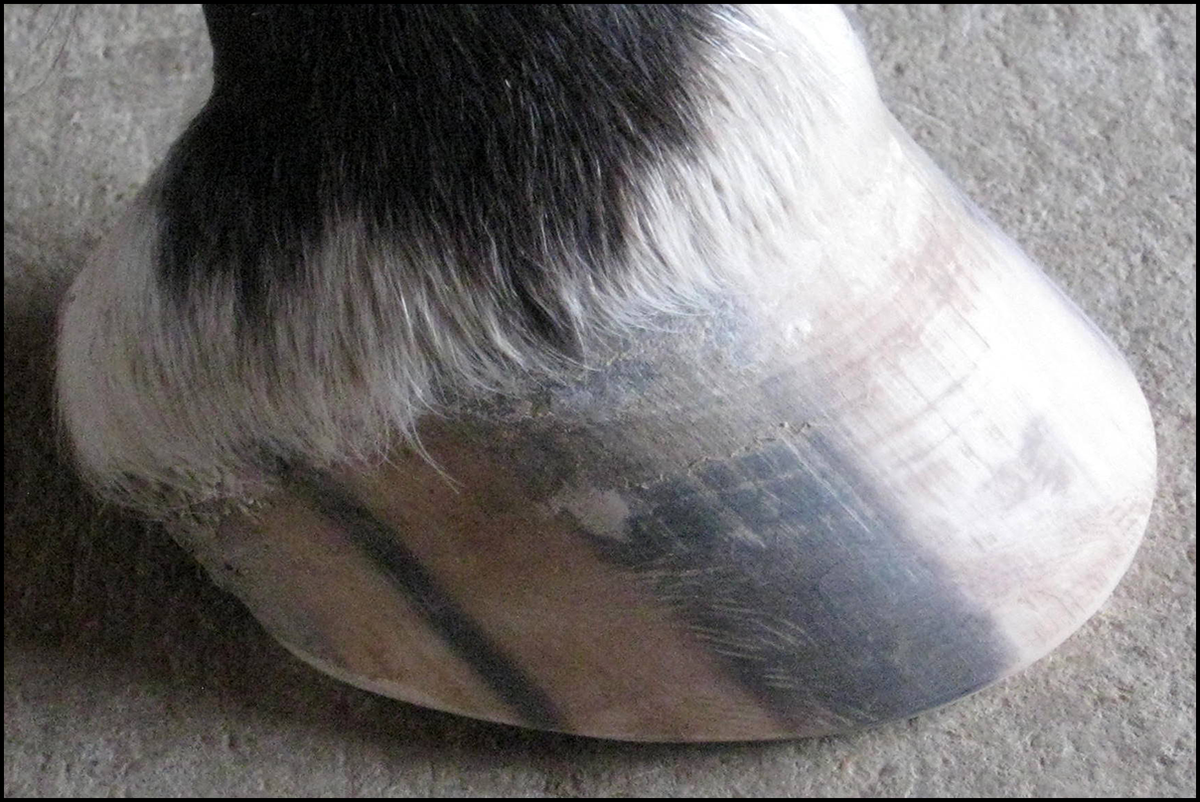
It’s once again time to write a few lines about two exciting upcoming opportunities to study hoof care with Liberated Horsemanship – one of the most comprehensive and highest-quality training programs currently in existence. What really sets this program apart is not only its commitment to absolute adherence to the so-called “wild horse model” based on Jaime Jackson’s observations of the feral horses of the U.S. Great Basin (unlike nearly every other program I’ve encountered), but also its recognition of the importance of a “whole horse” approach to hoof care. Thus, other aspects of equine management such as herd dynamics, nutrition, facilities design, training, and dentistry also play a significant role in their offerings.
I strongly recommend every horse owner attend one of these clinics, regardless of whether or not you’re interested in ultimately trimming horses. Why? Quite simply, because doing so will enable you to identify whether or not your horse is receiving proper hoof care, which the overwhelming majority of horses are not. All you have to do to know that’s true is visit any barn and count the number of foot problems!
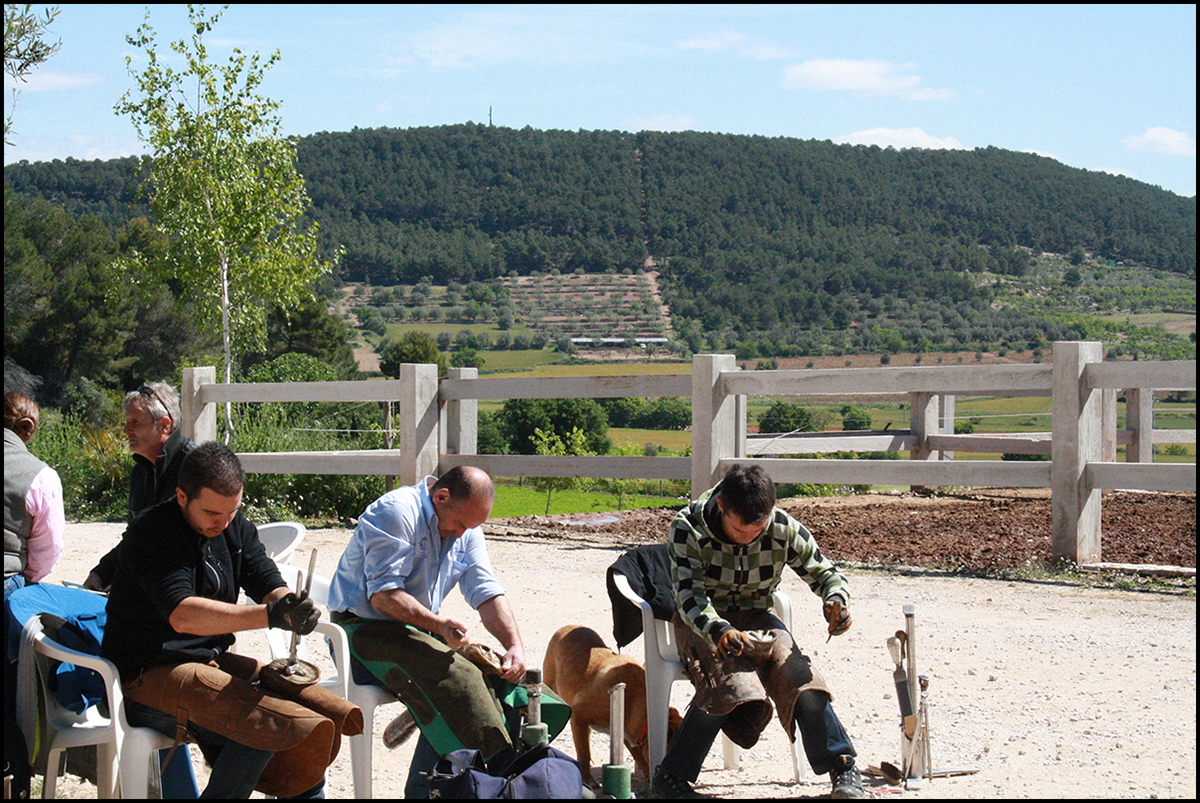
Hoof trim clinic in Spain
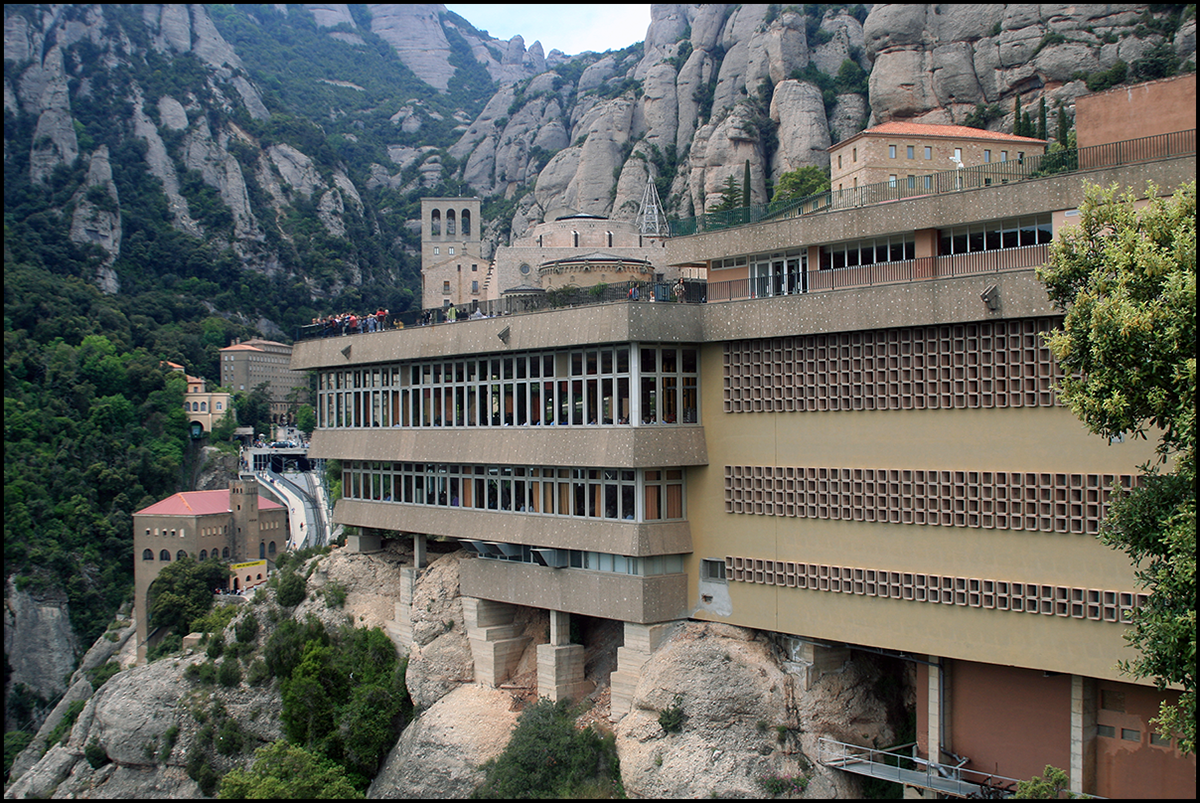
First on the calendar is the European Gateway Clinic being held once again in La Llacuna, Spain from May 18th to May 22nd. This is a great chance to learn hoof care in a stunningly beautiful setting in a quaint village in the mountains of Spain, about an hour’s drive from Barcelona. What’s especially nice about the Spain clinic is not only the opportunity to meet and discuss hoof care and culture with people from many different countries – we’ve had people from Austria, England, France, Germany, Russia, Scotland, Sweden, Spain, and the U.S., so far – but also the occasion to see some spectacular attractions like nearby Montserrat, and Barcelona’s many cultural and entertainment offerings.
Montserrat
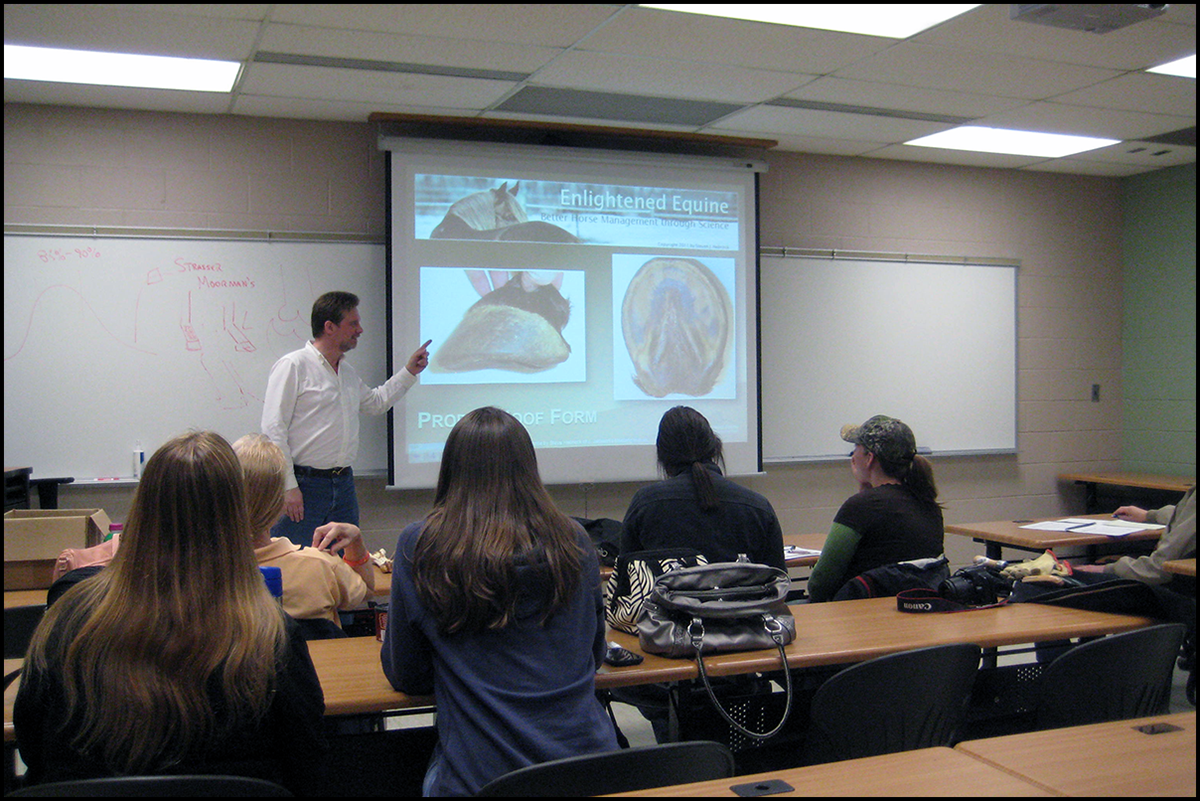
Next is the United States Gateway Clinic taking place for the first time in Wooster, Ohio at The Ohio State University Agricultural Technical Institute from June 12th to June 16th. I’m particularly excited about this offering because not only is it on my “home turf,” but because we’re having a special, open-to-the-public event on Friday evening, June 12th, featuring our (OSU ATI’s) two equine professors and myself speaking on three very different and equally absorbing topics! Dr. Karen Wimbush will present the very interesting results of her study on the relationship between the weight of the rider + tack and the horse (which I briefly described in How Much is Too Much?); Dr. Jessica Suagee will give a highly informative talk on the basics of equine nutrition, including understanding hay analysis results and planning a proper diet; and I’ll be discussing the philosophy behind, and advantages of, proper barefoot trimming. Plus, we’re planning some interesting “field trips” during this clinic!
Hoof clinic at ATI
So consider joining us on one of these not-too-frequent, but vitally important, occasions. You’ll find a bunch of like-minded, interesting, and encouraging folks to spend a few days with. And you’ll leave with new friends, great memories, and a whole lot of important knowledge. But sign up soon, because these opportunities won’t last forever…
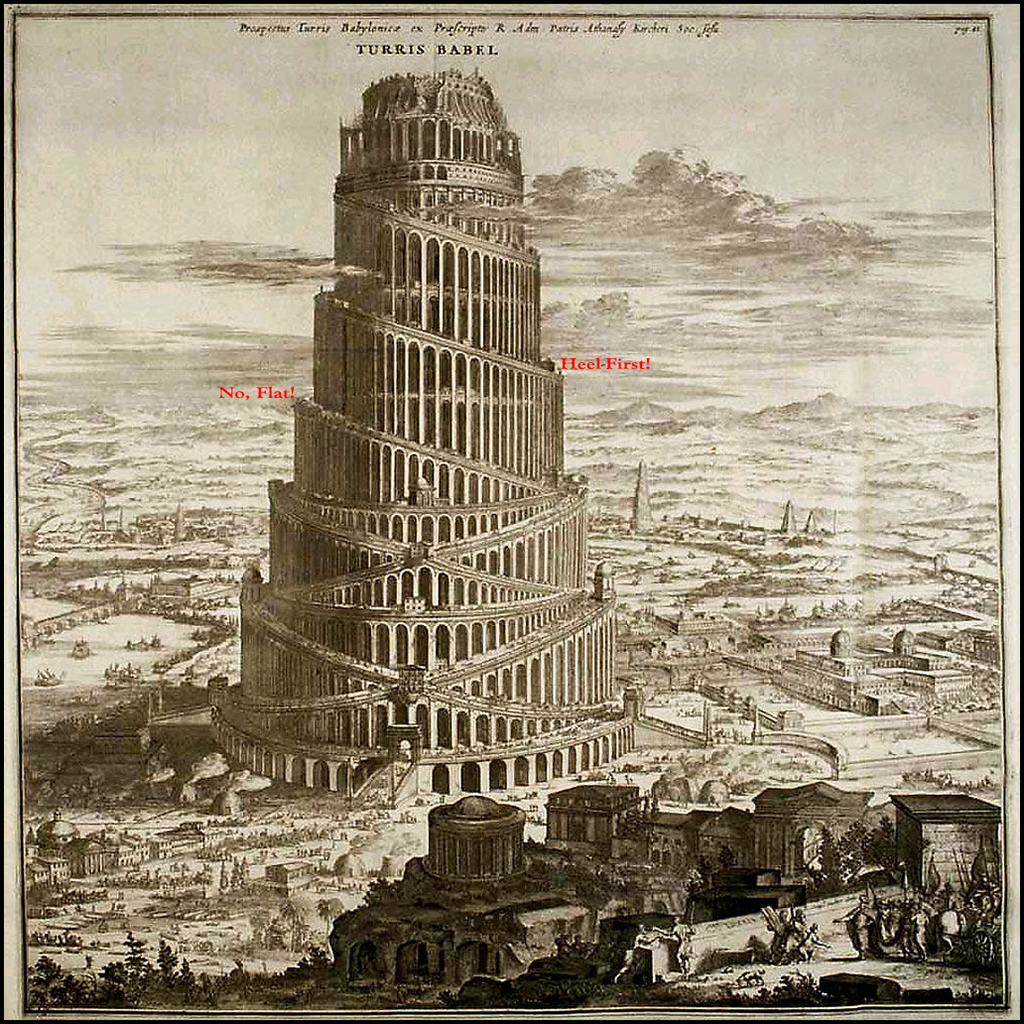
– with apologies to Athanasius Kircher for modifying his drawing
This isn’t even remotely what I expected to be writing about right now. In authoring my recent series on heel-first landings, I assumed that everyone likely to read them was familiar with the definitions of the various types of landings – probably because what the different landing types are called are, in themselves, accurate descriptions of what happens when the hoof contacts the ground. That seemed like a completely logical assumption, since in my 20+ years of discussing this subject with all types of hoof care providers, horse owners, veterinarians, and students, I’d never encountered a single person who didn’t understand these distinctions.
Until now. For the past several days, I’ve been carrying on an interesting and lively exchange with some hoof care providers on Facebook over what constitutes a “good” landing for a horse, with them insisting that a heel-first contact is healthy and normal. If you’re reading this, you probably already know that I steadfastly believe this to be not only incorrect, but damaging as well. Consequently, we’ve been going round and round, making absolutely no progress at all, until trimmer Dora Libby pointed out that the landings they’ve been observing in a number of videos on YouTube are improperly labeled as showing heel-first landings when they’re very clearly flat landings. So it’s now evident we’ve really been disagreeing over semantics rather than biomechanics!
Yes, this is a big deal. Proper landings are not only a major topic of controversy in the hoof care and horse worlds, but are also very important for the long-term comfort and soundness of your horse, as you’ll see in the upcoming series on navicular disease. So if much of the apparent disagreement “out there” is really a matter of definitions, the first order of business must be to get that straightened out.
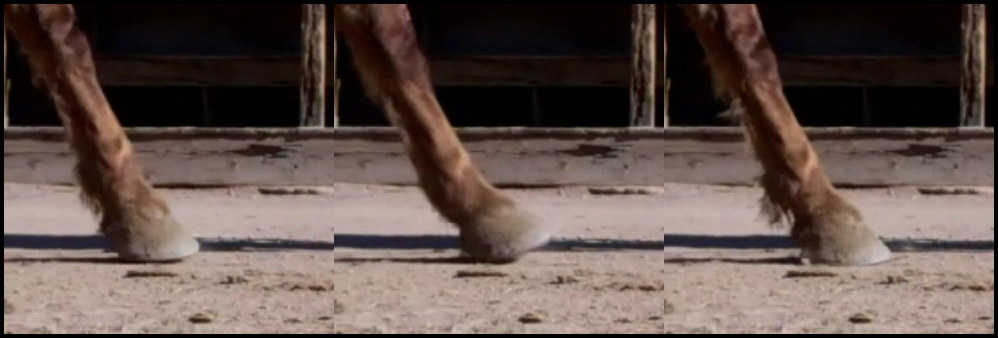
The definitions I’ve always used and taught are the same ones Dr. Rooney used in Biomechanics of Lameness in Horses. They’re easy to understand because, as I’ve previously stated, the landing type also describes what happens as the foot contacts the ground. In the front-to-back (A/P) direction, there are three possible ways a hoof can make contact: toe-first, heel-first, and flat.
In a toe-first landing, initial ground contact is with the bottom leading edge (“toe”) of the hoof, followed by a rapid front-to-back rotation of the coffin joint as the foot comes under load, until the heel buttresses (“heels”) contact the ground. Note, by the way, that Jaime Jackson points out in The Natural Horse that toe contact can occur in several different areas of the toe, including a single region directly at the toe, or two regions located symmetrically or asymmetrically about the toe. In my experience, toe-first landings are the least common type, which is fortunate because they’re also the most potentially destructive.
In a heel-first landing, initial ground contact occurs in the opposite order: the rear-most bottom part of the hoof – the heel buttresses – contact the ground first, followed by a rapid back-to-front rotation of the coffin joint as the foot comes under load, until the toe contacts the ground. This is far and away the most common type of landing I see, and trimming or shoeing to accomplish it is the stated objective of many hoof care professionals, veterinarians, and horse owners. But this is also a destructive type of landing, as my upcoming articles on navicular disease will explain.
In a flat landing, the toe region and the heel buttresses contact the ground simultaneously, with no rotation of the coffin joint following ground contact. Note that as pointed out in The Myth of the Heel-First Landing – Part 3, the heels of horses who live on softer terrain will actually penetrate the terrain on ground contact and therefore have no coffin joint rotation as the foot comes under load. This is effectively a flat landing under those conditions, but be aware that the same horse will exhibit a distinct heel-first landing on harder terrain.
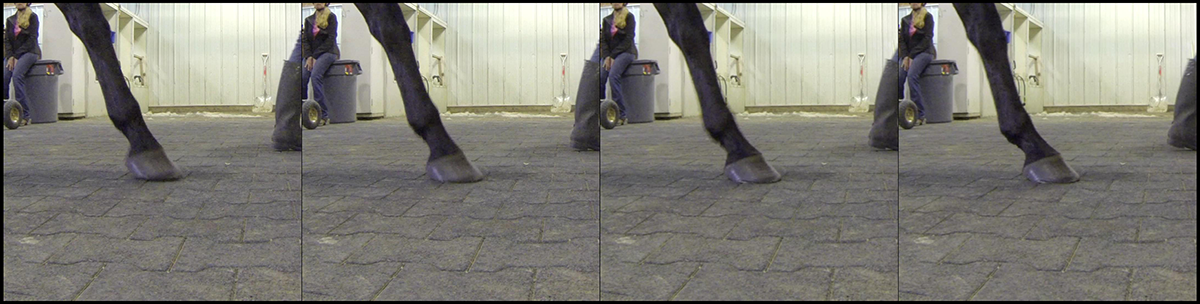
To help make the differences more obvious, I’ve produced the YouTube video above showing clear examples, in slow motion, of each type of landing, along with a bit of commentary. Please share it with other hoof care providers and horse owners so we’re at least on the same page when it comes to discussing this very important topic!
Hopefully, Part 1 and Part 2 of this series have laid sufficient groundwork (no pun intended!) for you to now be ready to hear why the feral horse lands flat-footed at the walk. Let’s briefly summarize what we’ve covered so far:
As a quadruped, the horse’s anatomy and way of going differs from the bipedal human, and therefore his movement cannot be compared to the movement of the human
The human is incapable of seeing small but significant differences in how a horse lands without the aid of slow-motion video
Barring injury or other mitigating circumstances, the horse does not actively position his foot for landing
The mass of the healthy, properly-trimmed equine foot is fairly evenly distributed front-to-back about the center of coffin joint rotation
Any longer part of the hoof wall relative to the rest of the hoof wall will strike the ground first
The addition of length or mass can significantly affect the flight arc of the hoof, and, therefore, the way the hoof impacts the ground
And now we need to talk about the effects of movement and terrain on the hoof.
One of the things you may have noticed about your horse, whether he’s shod or barefoot, is that the harder and rougher the terrain he’s used on, the more rapidly his shoes or hooves wear. That’s only logical, since even the steel of a horseshoe is not as hard as many of the minerals present in soil. And given that the typical feral horse travels an average of just under 12 miles per day, it’s no wonder that the constant abrasion results in obvious signs of wear. So if we look at the foot of a feral mustang from a very arid and abrasive environment like the U.S. Great Basin, we see evidence of considerable wear –
Note the pronounced rounding of the wall (“mustang roll”) where it contacts the ground, the arch of the foot in the quarters, the blending of the bars and sole into a smooth, polished-looking surface, and the leather-like appearance of the frog. The entire hoof is very short, with the heels worn back to the widest part of the frog.
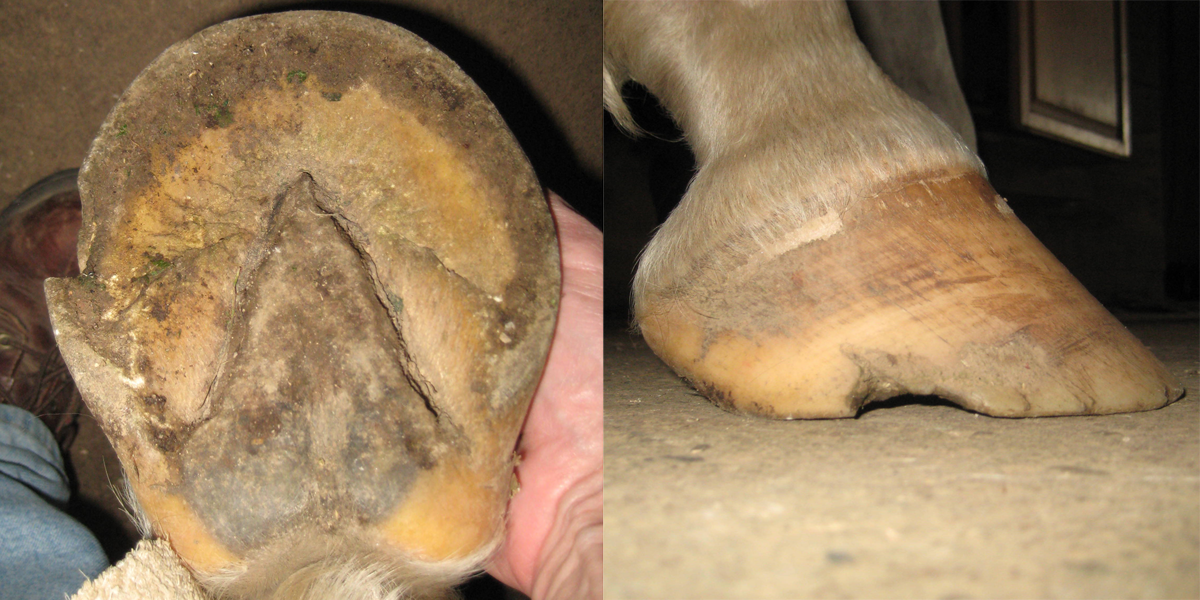
In contrast, look at the same features on this domestic Ohio horse, whose typical day consists of about half his time in a fairly wet, grass-filled pasture and the other half in a stall, about 6 weeks after his last trim –
As you’ll note, the wall shows little evidence of wear, with a fairly sharp edge. The arch in the quarters is only evident to the extent that the horse has started to break off excess length in that area in the form of a large chip. The bars are quite a bit higher than the contour of the sole, and the presence of tiny cracks along with the lack of a smooth, shiny appearance suggest that old sole growth has not yet been worn away. The frog has a somewhat “swollen” appearance, and the heels are disproportionately long and therefore well forward of the back of the foot.
These two hooves are rather typical examples at the near-extremes of a continuum of wear, with the consequences of lots of movement over arid, abrasive terrain at one end, and relatively little movement over soft, wet terrain at the other. Keep in mind that the difference in movement between typical feral and domestic horses is tremendous; the domestic horse would have to do 24 laps per day around the perimeter of a 10-acre pasture to equal the distance traveled by a feral horse in the same amount of time!
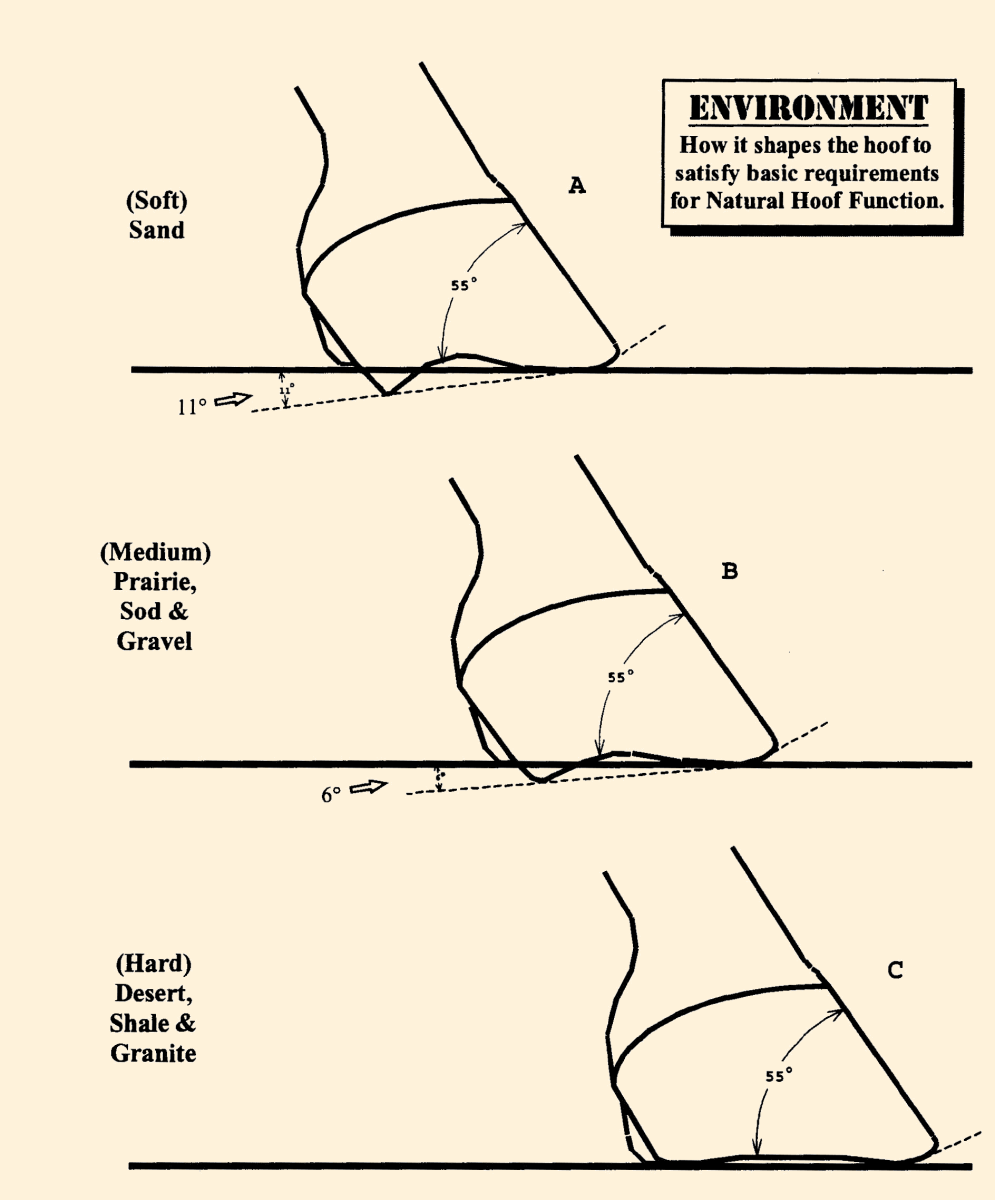
The relationship between types of terrain and degree of wear was documented by farrier and horseshoe designer Gene Ovnicek. Take a look at this illustration from his book New Hope for Soundness, Second Edition –
As you can see, as the terrain becomes softer, the heels experience less wear. But because the heels actually penetrate the softer terrain, the effective toe angle remains essentially constant. Obviously, if you were to stand these three horses on a flat, unyielding surface such as concrete, or move Horses A and B into Horse C’s environment, only Horse C would measure with the same toe angle as he did in his “natural” environment; Horses A and B would have more upright toe angles because of their longer heels. From what we learned in Part 2, therefore, we know that on a flat, unyielding surface, Horse A is unquestionably going to have a more pronounced heel-first landing than Horse B, who will have a more pronounced heel-first landing than Horse C.
This is why so many people erroneously conclude that horses must be designed to land heel-first; very few of our domestic horses both live in desert environments and move as much as feral horses, which makes them much more like Horse A than Horse C. So it’s logical to assume that every horse we’re likely to observe moving over a flat, unyielding surface, including all feral horses except those from environments like Horse C, will land heel-first to one degree or another. But just because that’s what we happen to observe on flat, unyielding surfaces doesn’t mean they’re supposed to land that way on every surface!
The very important point to be made in this discussion lies in the realization that all three horses in the above illustration share a critically-common albeit not obvious characteristic, in spite of the differences in their environment: at the instant of impact, the coffin joint (the joint between the short pastern and the coffin bone) is undergoing no 3rd-order acceleration. Although the foot as a whole is decelerating as it makes contact, the coffin joint is not also rotating at the moment of impact. Any rotation (3rd-order acceleration) of the joint, as we’ll examine in the next installment of this series to be entitled “Navicular Disease – Part 1: Background,” turns out to be an absolutely crucial factor affecting the long-term comfort and soundness of the horse.
Meanwhile, when we consider all this wear happening to the bottom of Horse C’s hoof from miles and miles of travel over highly abrasive ground, isn’t it a logical conclusion that any part of the hoof that was long relative to the rest of the hoof would very quickly be worn off? For example, each front leg of a 1,000-pound horse will have approximately 600 pounds of weight grinding that hoof into the ground with every stride over his entire life. How could it not be worn flat? So Horse C’s coffin joint ends up not rotating because he’s hitting the ground flat; Horse A and Horse B are undergoing no coffin joint rotation because their heels are penetrating the terrain and they’re effectively landing flat.
A beautiful, zero-coffin-joint-rotation landing
In closing, I’m going to leave you with a couple of statements to consider in preparation for the next article in this series. I truly hope I’ve paved the way for them to be read and understood. But before you read them, I sincerely hope you’ll put aside whatever else you may have heard or read to the contrary on this subject, regardless of where you heard it or whomever said it, and let only common sense and your own experiences – horse and non-horse – guide your thinking. These statements are my inevitable conclusions about landings drawn after a careful analysis of facts over a 20-year period, and I unreservedly stand behind them. They are:
In the feral horse, a heel-first landing is not possible
In the domestic horse, a heel-first landing is not desirable
As I mentioned in Part 1 of this series, the eminent author and equine pathologist Dr. James Rooney – arguably one of the most experienced researchers of the equine limb in the world – also eventually came to these same conclusions. So why is it taking so many others so very long to catch on?
More soon…
ADDENDUM
Following the publication of this article, I’ve had discussions with several people who seem to have not read the entire series of articles, and have therefore misunderstood my two conclusions about landings stated directly above. Therefore, I thought I’d clarify/qualify them a bit more, even though this same information is contained within this and the previous two articles.
Statement 1:
In the feral horse, a heel-first landing is not possible
This statement is predicated on a couple of conditions. First, it is relevant only to a healthy feral horse moving on its flat native terrain at its most common gait (the walk). Although I suspect the same landing happens at faster gaits, I’ve done only a bit of video work at higher speeds, and am therefore not yet comfortable making that statement. Second, as I’ve tried very hard to explain in this article, on softer terrains the heels will appear to strike the ground first, but are actually penetrating the terrain. The net result is that there is no rotation of the coffin joint at the instant of impact; thus, in mechanical terms, they are effectively landing flat. So a heel-first landing, by my definition, is actually a non-zero-coffin-joint-rotation landing. This is the important distinguishing characteristic in a landing.
Statement 2:
In the domestic horse, a heel-first landing is not desirable
Similarly, this statement is really meant to say that a non-zero-coffin-joint-rotation landing is not desirable in the domestic horse. This is applicable when the horse is observed walking on a flat, unyielding surface, and often cannot be seen without the aid of slow-motion video. It can, however, be readily heard on these surfaces because of differences in our auditory, as opposed to our visual, acuity.
First of all, Andero and I want to wish each and every one of you a most joyful holiday season! I wish I’d been able to write this particular article several months ago as planned, but life definitely has a way of proceeding at a pace that’s largely beyond one’s control. In fact, I’d fully intended to finish up the series on proper landings as well as post several other articles I’ve been working on, but instead have spent much of my time this past year working on what I think will prove to be some exciting and useful new products. So things are finally in hand again – if only temporarily 😉 – and perhaps you’ll be able to brighten your own or someone else’s life with the first of those products, which I’m about to describe below…
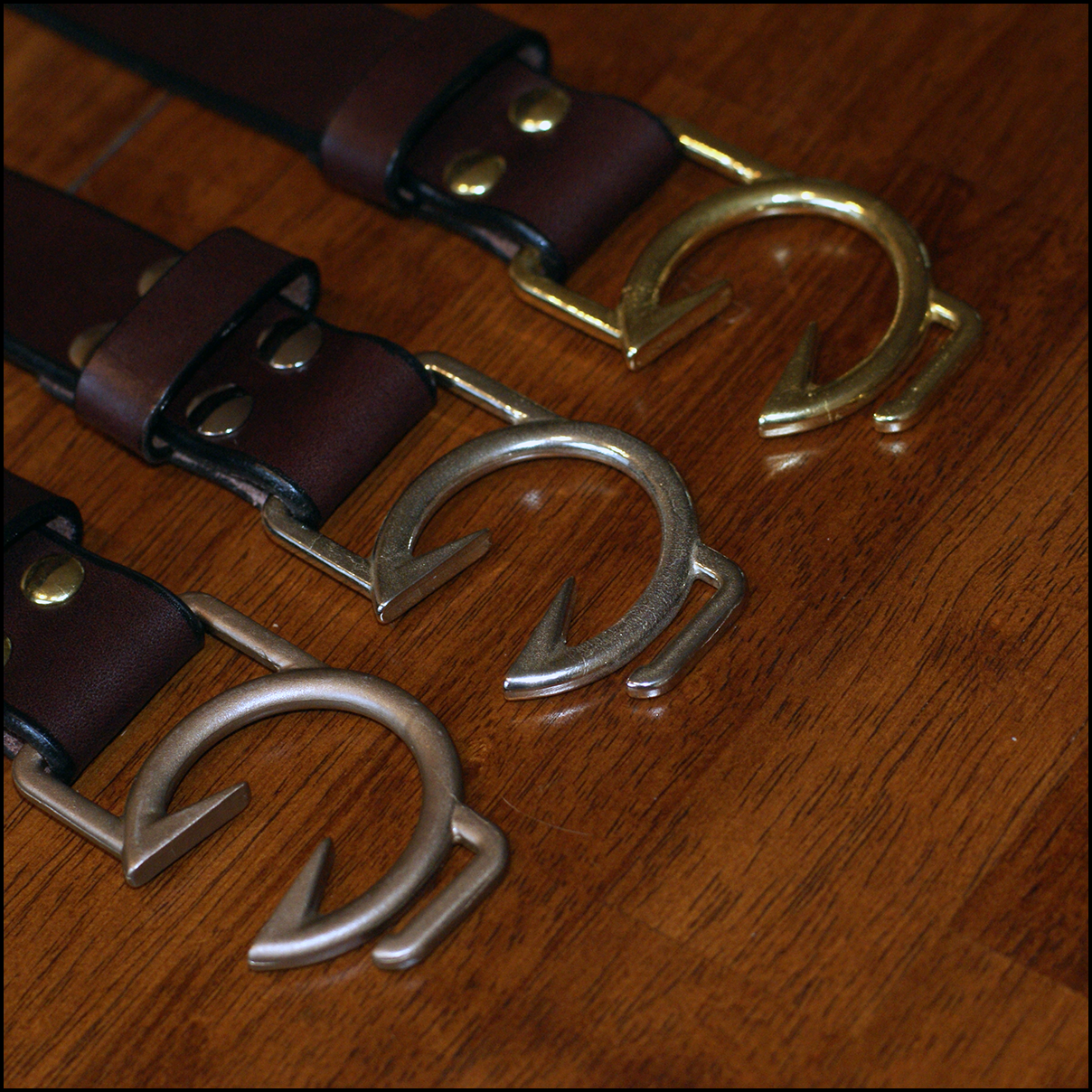
A few years ago, someone gave me a belt whose buckle was a re-envisioned application of an inexpensive folding hoof pick, which I really liked! I’d already been toying with the idea of creating a belt buckle for the “hoof world,” and the way this particular belt adjusted and fastened inspired me to move forward with the project using a similar technique. That product is now available for purchase here, and I thought I’d introduce it by talking a bit about the entire product development process, which hopefully you’ll find interesting.
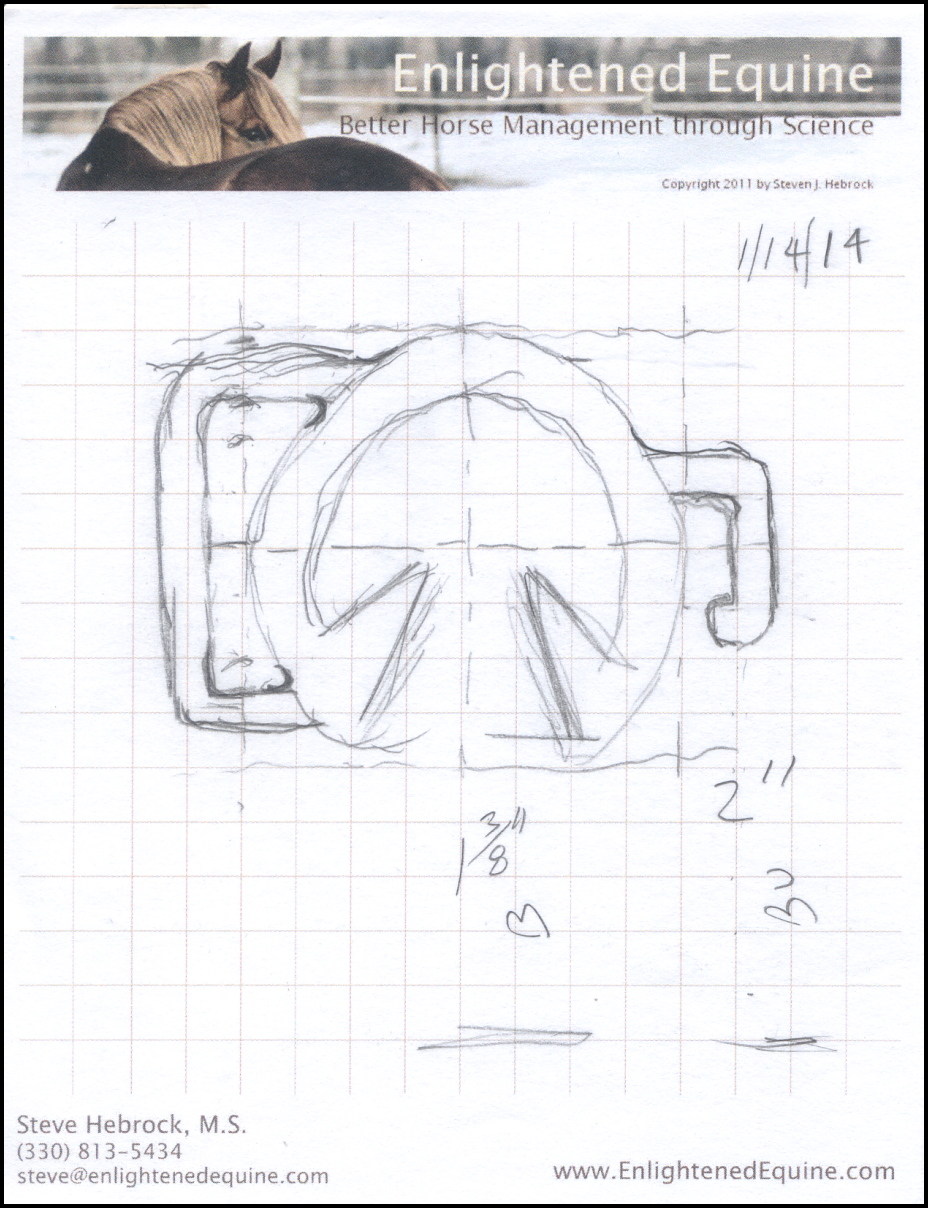
Regardless of the type of design I’m working on – electronic, mechanical, software, or aesthetic – most begin with a number of sketches such as the one shown below. In this case, I’m trying to capture the right shape and size for the buckle to evoke the impression a properly-trimmed bare hoof leaves in the sand.
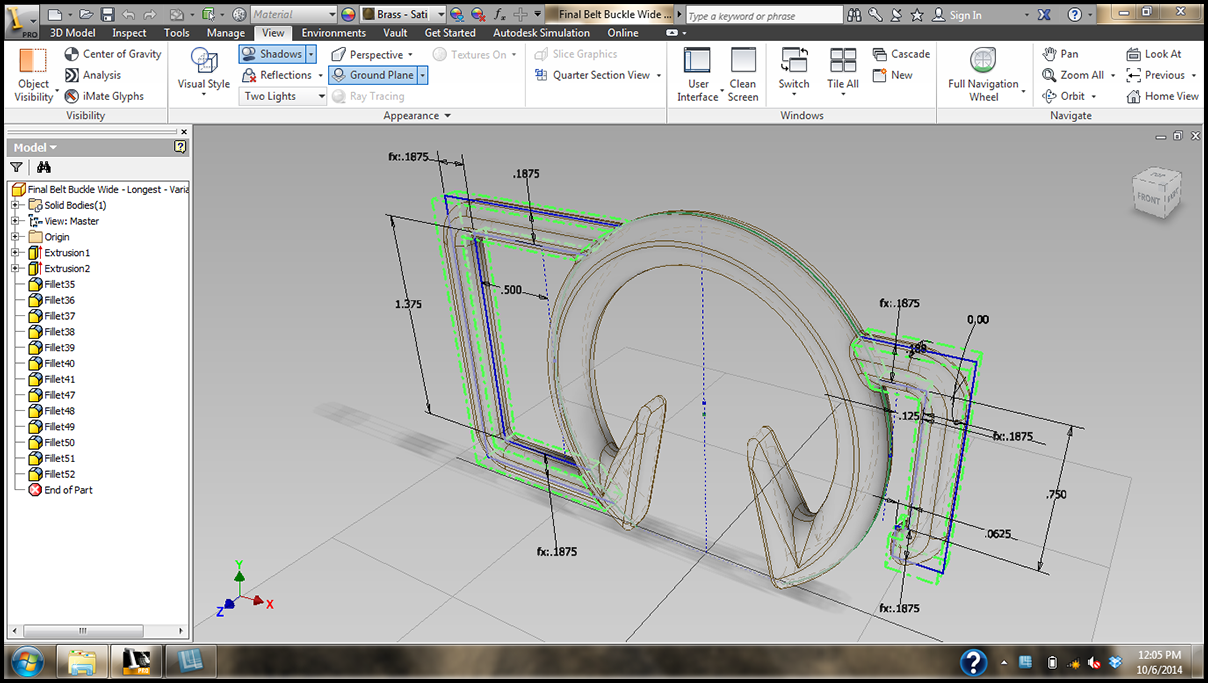
Once I come up with a suitable rough design, I usually switch to the computer to more accurately capture the design intent and start working out the problems. For the buckle, I created a 3D solid model of it in my CAD (computer-aided design) software so I could get a better sense of its proportions as a three-dimensional object and fine-tune its dimensions.
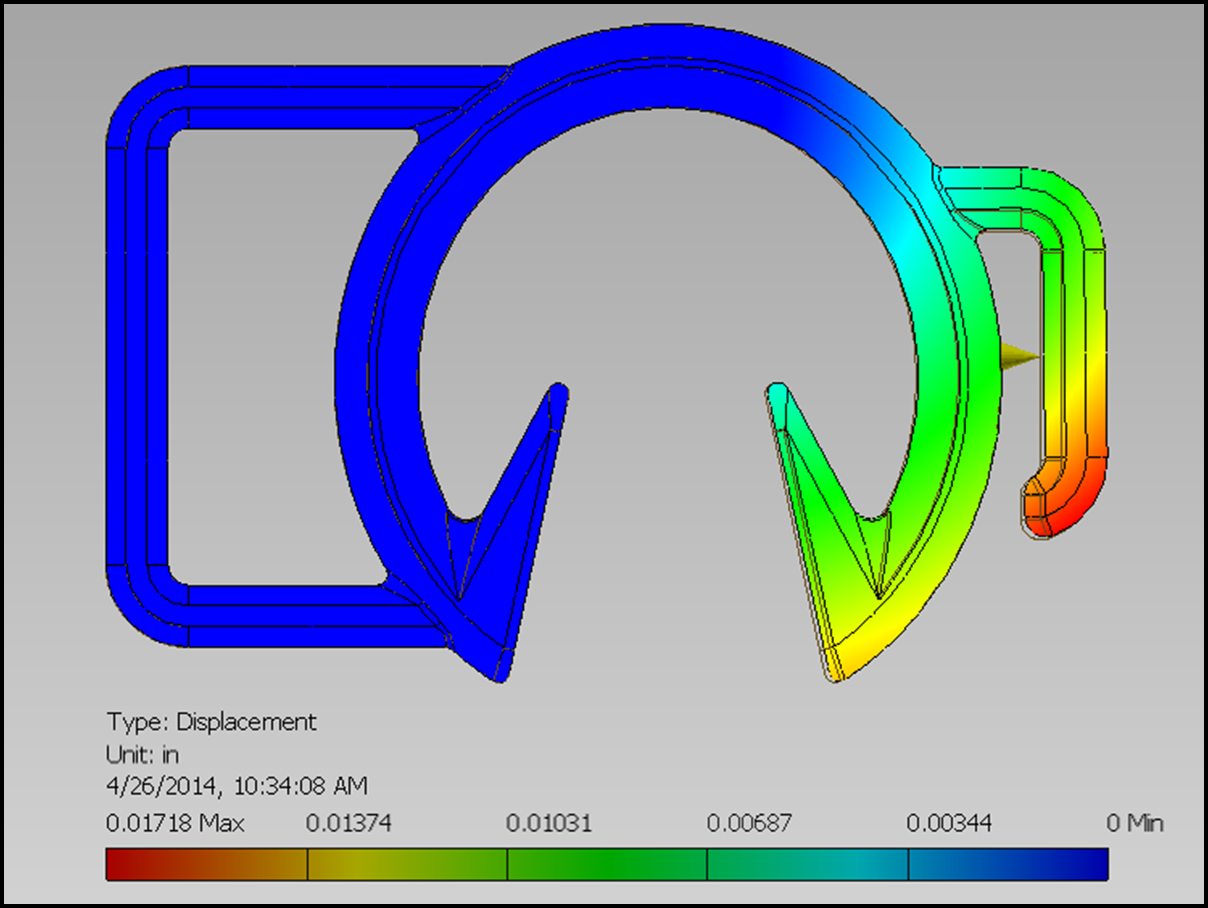
There are always issues and potential issues with any new design, and identifying and solving them early on is always preferable to waiting until the design is actually in production. So after finally coming up with a cosmetically-acceptable CAD model, I also verified the design from a structural perspective by subjecting the model to various analyses such as the stress analysis below. In this particular case, I was examining the amount of displacement (“bending”) the finished product, made of brass, would experience if the hook had 20 pound of pulling force applied to it. Note that the maximum amount of bending would occur at the very end of the hook, which would flex only 17 thousandths of an inch!
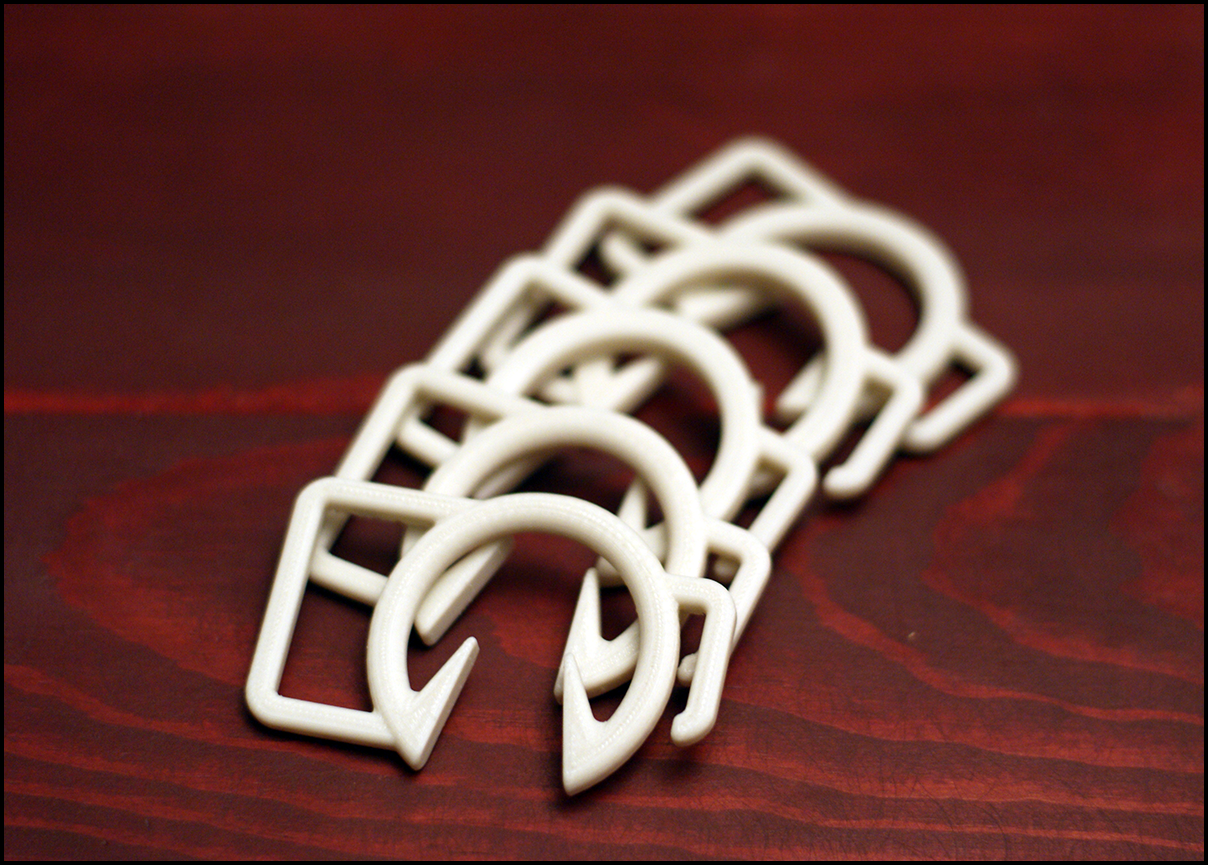
The computer is a wonderful tool, but it’s difficult to substitute anything for actually touching and feeling a physical prototype. So I then had several minor dimensional variations of the design 3D printed so I could test the functionality of the buckle with various leather thicknesses. Once I identified the specific dimensions I wanted, I had a pattern for casting machined, and then off it went to the metal casting company to have the parts made.
As I was finalizing the buckle design and manufacturing, I was also visiting second-hand stores to find used belts I could cut up to make belt prototypes. Once I’d decided on dimensions and belt sizes, I created an engineering drawing for the vendor. And after two or three variations, an acceptable design emerged and the belt was finally done. Thus, a product is born!
All of this took months to get through, and I’m not going to drag this out by giving you the details of locating acceptable vendors and coming up with packaging for the belt. But I will say that more designs are in the works, and include some very useful tools for hoof care as well as other “fashion” designs. All of these products can now be found on my new eCommerce site.
Have a wonderful holiday! More articles (I promise!) and products to come in 2015…
It’s been my intention from the beginning of Enlightened Equine to occasionally showcase products and services I believe to be of exceptional value to horse owners and horse care professionals, but thus far I really haven’t done so. However, that’s all about to change as I devote this article to describing what I consider to be an extremely useful product AND service for owners and care providers just introduced by my friend and client Dr. Daniel Michaels. Like us, Danny is a “horse person,” and this product reflects his solid understanding of the horse owner’s wants and needs.
I can’t say for certain, but I suspect we all feel pretty much the same way about our horses. Translation: we spend a lot of time, energy, and money on them, and are therefore always interested in anything that may save any one or more of those. Well, EQUITAG HORSE is just such a product!
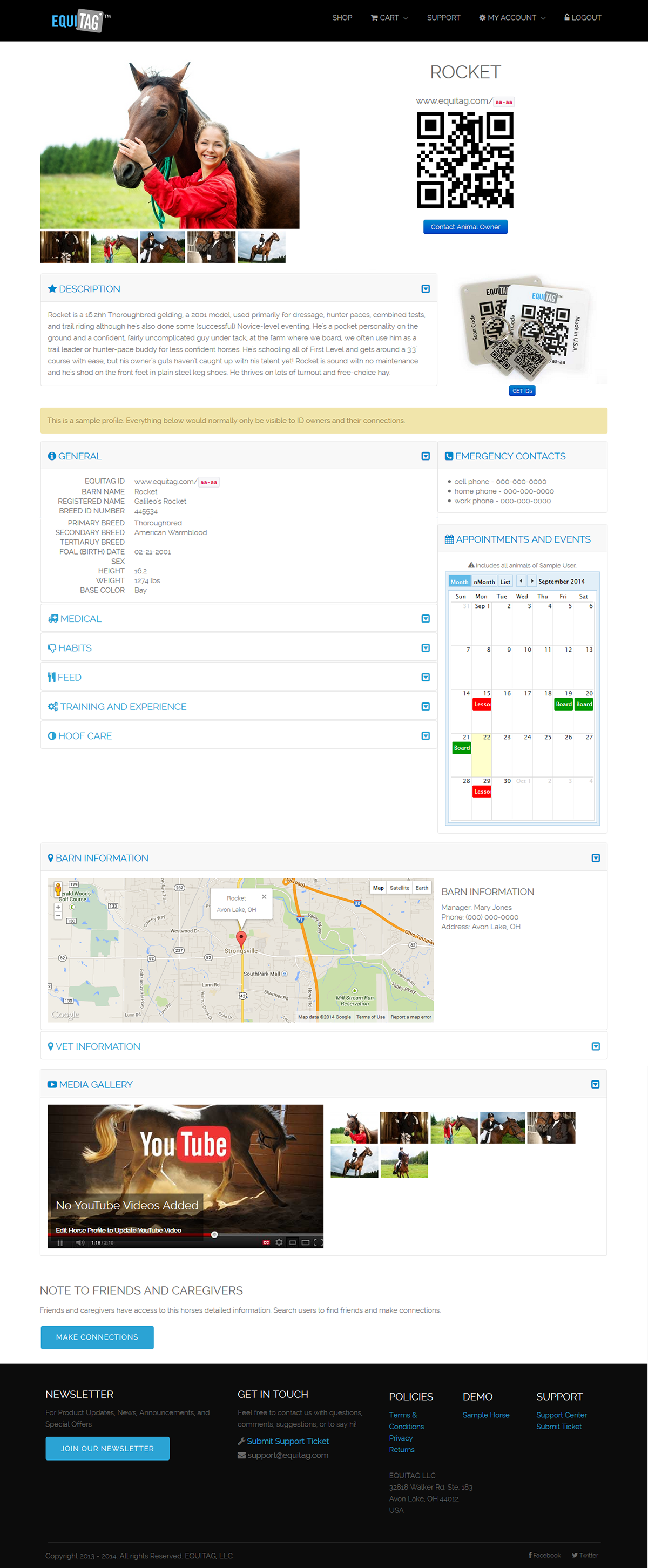
Simply put, EQUITAG is a system for managing practically every aspect of your horses’ lives from any smart device. Nearly any horse-relevant information can be stored in EQUITAG‘s online database, and then accessed from your smartphone or tablet. Vaccination records, feed information, favorite photos, training notes, vet appointments, YouTube videos – all of it, and much more, can now be quickly and easily stored in one convenient location. No more digging through files or piles to figure out when your horse’s teeth were last floated!
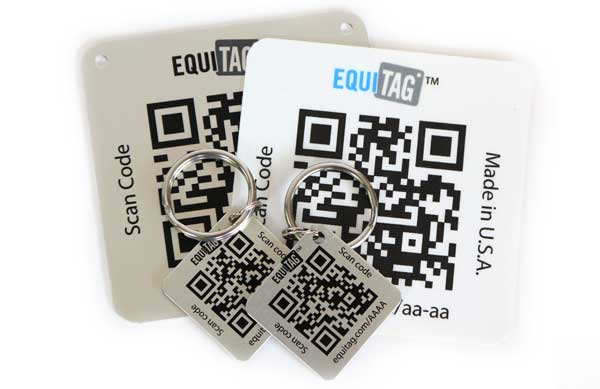
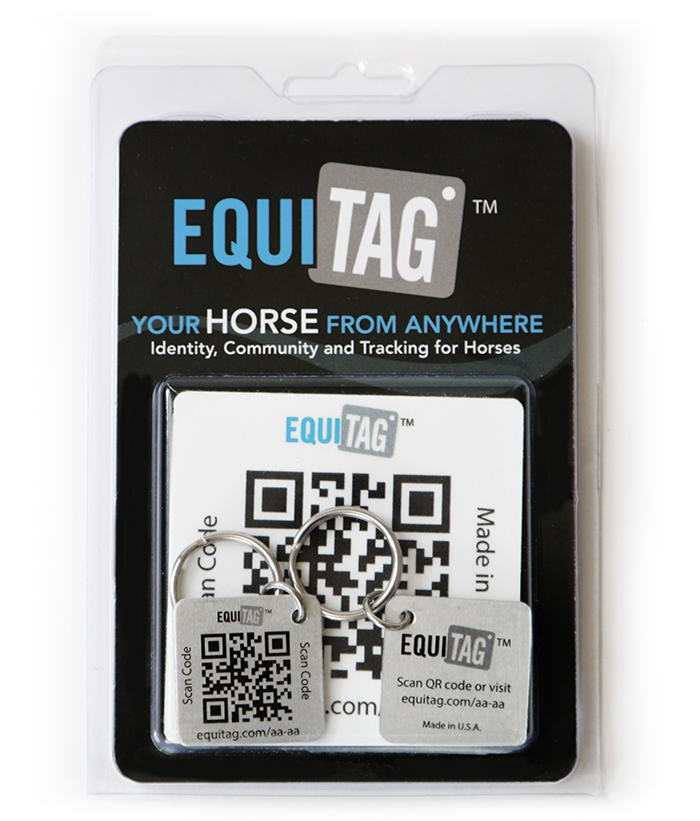
But the real power in Dr. Michaels’ product lies in the way this information can be accessed and shared. When you purchase a subscription (the introductory rate is $44.95/year, or – better still – a lifetime subscription is only $59.95), you’ll also receive a set of EQUITAGs photo-etched with your horse’s unique QR code. These tags, which can be scanned with a free app on any smart device, lead directly to your horse’s own profile page with all of his information, as shown above. The current EQUITAG subscription includes one aluminum stall tag, two aluminum keyring tags (think halter!), and one vinyl trailer (or tack box) tag. So you don’t have to carry those radiographs or Coggins test results with you any more; just scan one of your tags to retrieve them! And, of course, you can always access your profile page through the EQUITAG website via any Internet-connected computer or mobile device.
It gets even better. Once your barn manager or other care provider sets up his or her own free EQUITAG caregiver account, he/she then has access to (but cannot modify) all of your information! That means your care provider can verify your current feed or supplement schedule any time, or check when to bring your horse in for your upcoming hoof care appointment. But more importantly, in an emergency situation when minutes may count, he or she has immediate access to all of your horse’s medical information, which may mean the difference between life and death.
And since you can see and share profiles, it’s also a lot of fun! Meet other horse owners with similar interests. Set up people as Friends so you can exchange event information, coordinate training and show schedules, and schedule same-visit vet and massage therapist appointments. Imagine your entire barn equipped with EQUITAGs and simply scanning your stablemates’ tags to know when the dentist will visit!
I sincerely hope you’ll consider simplifying and enriching your “horse life” by adding EQUITAG to your horse’s life; you’ll both be glad you did!