Now that we’ve examined the caloric impacts of forage and processed feeds on the horse’s diet in Part 1 and Part 2, respectively, let’s take a look at what happens when grass pasture is added to the mix.

According to Dairy One‘s data, “pure” grass pasture has a Digestible Energy of 911 calories per pound with a Standard Deviation of 171 calories, based on 8,436 samples, while mixed, mostly grass pasture (MMG) has a DE of 962 calories with a S.D. of 127 calories, based on 18,544 samples. That translates to 95% of grass pasture having a DE value between 569 and 1,253 calories, while 95% of mixed grass pasture has a DE content between 708 and 1,216 calories. Why so much variation? Because so many factors affect the amount of sugar in, and therefore the calorie content of, grass. Time of day, time of year, amount of moisture, amount of sunlight, temperature – all these and more influence sugar content.

Attempts to actually measure pasture calories are far more common in the cattle industry than in the horse world, but the process is the same regardless of what species is grazing on it. Most often, a device called a plate meter – either the rising or falling type – is used to collect a series of measurements in a random manner throughout the pasture. These devices work by using a (usually) round, weighted plate of a known size to rest on top of the forage, and the distance from the plate to the ground is then recorded. The plate meter must first be calibrated, however, by taking a distance measurement on forage of the same type, clipping the forage under the plate to post-grazing level (with horses, generally 2.5 cm), and then drying and analyzing the forage sample for calorie content. Although simple in concept, many such samples are required for the calibration process to ensure reasonably-accurate meter measurements – a time-consuming endeavor. But by first collecting and analyzing these samples, a correlation between forage height (the distance measurement) and calories per square unit can be derived. After calibration, the amount of calories in a pasture can be fairly quickly and easily estimated by collecting and averaging a set of measurements. Plate meters are available with a wide range of features from several companies, but you can also construct your own for very little cost.

Using a homemade falling plate meter. Image from www.fieldcropnews.com.

But…before you spend either a fair amount of money on a manufactured plate meter, or a fair amount of time constructing and calibrating your own plate meter,  you may want to consider the following: Research has shown that horses’ rate of consumption of grass pasture varies greatly – and not in an entirely predictable way – depending not only on how much time per day they spend on grass pasture, but also on type of horse, temperature, time of day, season, grass height, grass composition, grass density and other factors, making any attempt at calorie calculations for grazing extremely difficult. For example, grazing researchers at North Carolina State University (Dowler, L.E. et al. 2012. “Determination of Pasture Dry Matter Intake Rates in Different Seasons and Their Application in Grazing Management.” Journal of Equine Veterinary Science 32: 85 – 92) note the following –

…this finding still suggests that horses have the potential to consume relatively large amounts of forage even when grazing for a relatively small portion of the day. These results suggest that DMI [dry matter intake] rate decreases with increased grazing duration and that the extrapolation of 24-hour DMI rates (eg, 2.5% of BW [body weight] in DM/d [dry matter per day]) to grazing periods of <4 hours may result in the underestimation of actual DMI. This may have implications for horse owners trying to manage BW/caloric intake of horses by reducing grazing time, in an effort to manage or prevent various diseases (e.g. laminitis, equine Cushing disease, metabolic disease, insulin resistance).

In other words, the relationship between pasture time and the amount of grass consumed is definitely not a linear one; rather, horses with limited pasture time tend to up their rates of pasture consumption, particularly in the first 4 hours. Simply put, this means: 1) even if the calorie content of a pasture is known, you cannot predict how many calories a horse will consume in a given amount of time with any reasonable degree of accuracy, and 2) you cannot use limited pasture time as a means of reducing calories without almost certainly limiting feed and/or hay availability as well. Interestingly, horses on continuous 24-hour grazing were found to voluntarily consume very close to their total calculated daily energy requirement, with no additional feed and/or hay required.

To further complicate this already-complex situation, some horses simply cannot eat green grass without developing metabolic problems, while others can happily eat green grass all day long and never have an immediate issue. Usually, the older the horse, the more often grass consumption becomes a complication. Because the reasons for these differences in tolerance are not well understood, it falls to the owner to determine whether or not grass causes difficulties for their particular horse. In keeping with my sentiments about mimicking nature in feeding, my personal preference is to allow horses only a very limited amount of green grass, based on the idea that the feral horse in his aboriginal environment is never in a position to eat mouthful after mouthful of green grass. Feral horses have evolved to eat sparsely-spaced dry, bunch grasses, and have to travel up to 12 miles every day to find sufficient calories; contrary to the increasingly common notion that domestic horses should have as much hay as they’ll eat, feral horses do not have unlimited access to forage, and certainly not to green grass. Expecting a horse to not overeat when plopped in the middle of the horse equivalent of a candy store all day strikes me as completely unreasonable.

Furthermore, I am becoming increasingly convinced that, like Type 2 diabetes in humans, we can help prevent the development of metabolic problems by feeding our horses as if they already had metabolic problems i.e. severely limiting the amount of green grass they eat. So, some sort of properly-designed (which, by the way, most of them are not) so-called “track system,” in which whatever forage present (mostly grass hay, perhaps with very small and widely-spaced-apart patches of green grass) is spread out over as large an area as possible to force the horse to move to be able to eat, seems to be the best situation for our domestic horses at present.

So there you have it: Although we can use average values to give us a rough idea of the calorie impact of grazing, just as we did with hay and with feed, the (even greater) number of variables affecting not only the forage itself, but also the horse’s rate of consumption, mean that such “guesstimates” should be used only as a very rough starting point for diet planning.

Based on what little published research has been done on the pasture dry matter consumption rates of horses, the average of the rates of consumption reported in these studies is 0.127 pounds of dry matter per 100 pounds of body weight per hour, plus or minus 0.032 pounds per 100 pounds body weight per hour. But keep in mind that that value is only reasonably accurate for longer grazing times – say, those over 3 or 4 hours. So instead of using that value, I’ve taken the 3-, 6-, 9-, and 24-hour measured grazing rate values from some North Carolina State University research, and extrapolated the intermediate values to create the following chart –

Make no mistake: This is a very rough estimate of calories consumed through grazing, as you’ll note by the wide range of values between the Low and High numbers. The next step towards improving the accuracy would be to use actual measured calorie values from your pasture, but, again, it’s still going to be an approximation.

In an attempt to make things a bit simpler, I’ve created an Equine Diet Planner in MS Excel, which you can either download for use on your own computer or use online within your browser.

As you can see in the screenshot of the Planner below, it incorporates the University of Minnesota weight calculator, which calculates Current and Ideal Weights, and then continues in the following section to calculate Required Calories by entering daily riding times.

The next section allows you to choose the amount and type of hay you’re feeding, or enter your own hay sample results, to calculate Total Hay Calories. Similarly, the feed section computes Total Feed Calories from the amount and type of feed, including allowing you to use values for a brand not on the drop-down list, which you can either obtain directly from the manufacturer or have tested by an independent testing laboratory.

The pasture grazing section has several choices for types of pasture, and then estimates Total Pasture Calories based on grazing time and whether or not your horse is muzzled. As I’ve noted above, pasture consumption is undoubtedly the most difficult to predict, but this will help give you at least a point of departure for diet planning.

Finally, the Summary section at the end adds together the previously-calculated calorie values to give an overall picture of your horse’s diet. It also cautions you when the calorie intake exceeds or falls short of the calories required to maintain proper (ideal) body weight by more than 5%.

I would strongly encourage you to use this Planner to develop a better understanding of what and how much your horse is currently eating versus what he actually needs to maintain a healthy body weight, and I would encourage you to share it – and the information/videos from the first two parts of this series – with your friends and your barn owner as well. Because of the very large number of variables involved, though, please remember that ultimately the only certain guide to whether or not you’re under- or over-feeding your horse is an honest eye!

To wrap up both this Post and this series, here are a few things to keep in mind:

  • Be honest about your horse’s weight. If you can’t be objective, ask someone else to take a look. Better still, use accurate measurements in the weight calculator and trust the results.
  • Be honest about how much you actually work your horse. Time spent tacking up, walking to and from the arena, etc. doesn’t count as work time, nor does simply sitting on your horse while he walks around. Think of it this way: If you wouldn’t be sweating and/or breathing hard doing what he’s doing, it’s not work and shouldn’t be counted as such.
  • Be honest about what and how much your horse is eating. Weigh everything. Do the math, and figure out the best way to feed only what he requires to attain/maintain a healthy weight, spread over a 24-hour period.
  • Have your hay tested. It’s relatively easy and inexpensive, and since hay should far and away constitute the bulk of every horse’s diet, knowing how many calories are in it is important.
  • Remember that you can’t feed muscle onto a horse. If your horse has a bad top line or otherwise lacks muscle mass, increase his work load and feed the consequent higher calorie demand; don’t expect to put healthy weight on a horse with just food. And don’t try to rush either the weight loss or the weight gain process; feed for his calorie requirements, and things will take care of themselves.
  • Consider your particular situation when planning your horse’s diet. If you board, you may have very little to no control over certain aspects of your horse’s diet, such as pasture time or brand of feed, so control what you can: Use a grazing muzzle, reduce the amount of feed, increase the amount of hay, etc.
  • Remember that things can, and do, change. Your horse’s current dietary requirements may be very different from his requirements several years ago. Be aware of the impact of pasture time on his diet, and adjust his diet accordingly.
  • Finally, be logical in your approach to feeding. Consider how nature feeds the feral horse, and remember that mimicking nature will generally yield good results. Keep in mind there is plenty of  bad advice out there, including from those with PhD and DVM after their names. If what is offered is inconsistent with what I’ve presented in this series of articles, be suspicious!

Much more to come…

Well, I guess turnabout’s fair play, so when Dr. Bruce Nock said he’d like to turn the tables and interview me, I could hardly refuse! The only thing Bruce has mentioned so far is that he wants to question me about what hooves can reveal about not only the feet themselves, but about the rest of the horse as well. And that’s a fascinating subject that can be immensely helpful to horse owners, because the hooves can, of course, tell us a great deal about how the horse is doing overall – a true “mirror into the horse’s state of being,” if you will. So please consider joining us for this Facebook Live Event, and have your questions ready!

I readily admit it: although I arguably have a large and diverse set of skills, I’m certainly no animal behaviorist. But as I’ve told students for many, many years, the smart person is not the one who knows everything about a particular subject, but rather is the one who knows where to find the right answers to his or her questions about the subject.

Dr. Bruce Nock is the person I turn to for those right answers about training and behavior. As an animal behaviorist and scientist with a research career spanning over 40 years, Bruce is the type of experienced, “data-driven” resource I can count on to give me unbiased and scientifically accurate information. I find that particularly important in the horse world, where incorrect theories and a general misunderstanding of the science of animal training seem to flourish. So please consider participating with Bruce and me in our upcoming Facebook Live Event discussion of animal behavior and training – I know you won’t be disappointed!

LH clinics logo

Although I’ve discussed Liberated Horsemanship’s Gateway Clinics at various times in the past, I’ve never really taken the time to describe exactly what happens at the clinics, just how in-depth they really are, and therefore why I firmly believe they provide the most comprehensive and correct information on hoof care currently available. And since there are once again not one, but two, clinics scheduled for this year (June 3rd-7th at The Ohio State University ATI in Wooster, Ohio, US, and September 2nd-6th at Stonegarthside Hall in Nicholforest, UK), I’d originally intended to provide a more complete look at the clinics’ contents and this year’s presenters.

However, my plan to write a short biography of the clinic instructors, followed by a description of the topics each will be speaking about at the clinics, was quickly foiled as I started to put the biographies down on paper. Why? Because I was attempting to condense literally dozens of years of education and experience in hoof care into a few short statements, which would obviously be unsuccessful and of limited usefulness to anyone. So instead, I’ve decided to try to describe what I believe the strongest contributions of each of us are with respect to the clinics, and animal and hoof care in general, and leave the lengthier biographies to someone else. So here goes…

Bruce Nock badge photo

I met Dr. Bruce Nock in early 2006 when he was teaching an Advanced Horsemanship clinic as part of the certification program for natural hoof care pioneer Jaime Jackson’s organization called (at that point) the American Association of Natural Hoof Care Practitioners (AANHCP). Bruce is first and foremost a working scientist with an extremely impressive academic and practical background in animal behavior, learning theory, and stress physiology, and his current “day job” consists of ongoing research at Washington University’s School of Medicine which is funded by the U.S. National Institute of Health and focuses on the transgenerational and epigenetic effects of morphine. But Bruce is an avid horseman as well, and has used his extensive animal behavior education and experience to not only teach horse training and dressage for many years, but to author several books as well. In fact, his “Ten Golden Rules of Horse Training” is what led Jaime Jackson to require AANHCP students to study with Bruce, and later to make Bruce a member of the AANHCP’s Board of Directors. He’s also very actively involved in using his expertise in animal behavior and stress management to “give back” to the animals, through his efforts with The Kerulos Center and the American Wild Horse Preservation Campaign. In 2003, Bruce founded Liberated Horsemanship as what he describes as “a diversion from the impersonal world of science and to put my background in the science of animal behavior and physiology to practical use helping people with their horses.” That mission greatly expanded in 2009 when he and many others decided to leave the AANHCP, and the Liberated Horsemanship Barefoot Initiative was born.

Given Dr. Nock’s background, his clinic contributions will focus primarily on health and management issues: the physiology of equine insulin resistance, Cushing’s Disease, and laminitis; understanding and coping with management and use issues that impact horse and hoof health; and the unnatural stressors that are inherent to life in captivity. This means that clinic attendees have the exceedingly rare (dare I say…unique?) opportunity to learn about these absolutely-crucial-to-the-well-being-of-every-horse factors that the overwhelming majority of horse owners, veterinarians, and hoof care providers are rarely even aware of, let alone educated about, from an acknowledged expert. In my opinion, that alone makes these clinics well worth attending for every horse owner! I will further add that one of the many other things I  greatly appreciate and admire about Bruce is his unwillingness to offer advice on subjects about which he is not an expert; that’s a rare quality indeed, particularly in a horse world fraught with self-proclaimed “experts” constantly teaching and dispensing advice about things in which they have no education, limited (if any) actual experience, and therefore very little understanding of the subject.

Ann Corso Badge photo

Ann Corso and I first met in 2005 at a Carol Brett saddle-fitting clinic in Kentucky. A trained educator, Ann studied natural hoof care with Jaime Jackson from 2003 to 2005, was a Field Instructor and Natural Trim Workshop Leader for the AANHCP, and eventually became its Director of Training and Certification during its heyday as the premier hoof trimming training and certification organization. She left the AANHCP in 2009 to co-found the Liberated Horsemanship Barefoot Initiative with Dr. Nock, of which she is the Director. In addition to her large and diverse hoof care practice, Ann is the logistical mastermind behind all of Liberated Horsemanship’s clinics, and coordinates the field instruction and certification efforts of the students as well. One of the things I marvel at, and most value about, Ann is her seemingly endless knowledge of most of the hoof research efforts going on around the world, as well as the problems with what I call the various “fad trim styles” being taught and advocated by so many; if you want to know why a particular trim “style” can’t work – just ask Ann!

Besides making certain everyone has a ride from the airport, a place to sleep, and enough to eat, Ann will teach the fundamentals of proper hoof form and its importance, the underlying foot anatomy, and the theory of proper trimming. She’ll also discuss the various barefoot trim “models,”  and specifically why others may do certain things we don’t do – or not do things we do do – and the rationale behind those differences. Ann will also conduct the cadaver trim workshops every afternoon, where students not only receive extensive and specific trim instruction through hands-on learning, but also learn about the very necessary and practical matters of tool selection & use, hoof boot fitting, and horse handling.

Steve Hebrock badge photo

I don’t really enjoy writing about myself, so I’ll try to keep it brief. My rather diverse background includes music theory & composition, sound recording, and electronics/acoustics engineering, and I’ve designed products and one-off technical solutions for a number of companies over the years. Paralleling my engineering vocation was a career in education; I started teaching electronics classes in 1978 as an undergraduate student, and have continued teaching various technical subjects at several different universities since then. Most recently, I retired from nearly 20 years  of teaching at The Ohio State University ATI – the agricultural campus of the university – where I taught electronics, computer-aided design (CAD), and many different computer applications classes. More relevant to the subject at hand, I taught equine facilities management, sales preparation, and – yes – hoof care (which I still teach). You can read more about my hoof care journey in Why Me? and Horseshoes: A Means to What End?, but the bottom line is that the last 25 years of my life have been shaped by my realization in the early 1990s that the vast majority of horse owners, farriers, and veterinarians suffer from some very large misconceptions about how horses should bear weight and move, which drastically and adversely affects their care of, and advice about, horses. And I believe that my many years as a technical educator, natural hoof care provider, and hoof care educator have equipped me to share my knowledge and experience with others in a straightforward, logical, and extremely effective manner.

At the clinics, I’ll be discussing one of my favorite topics and ongoing areas of research: how and why the hoof should make ground contact as it does, and the importance of a proper landing to the long-term comfort and health of the horse. I’ll also be talking about the causes, symptoms, and management/treatment of the most common hoof pathologies, and be co-teaching the afternoon trim workshops with Ann.

So there you have it: three educated, acknowledged experts, each with lengthy and intimate experience with both natural hoof care and their individual areas of specialization, who also have extensive experience teaching their subject matter to people of every level of education and from every walk of life from all over the world! Whether you ultimately intend to regularly trim horses, or just want to take advantage of this unique opportunity to get your hoof, horse management, and behavior questions answered by experts, please consider joining us. I guarantee you won’t be disappointed. But…time and spaces are short, especially for the U.S. clinic, so contact me ASAP if you’d like to attend!

(Note: This is a much-expanded version of an article originally written for the 2018 edition of the Ohio Equestrian Directory.)

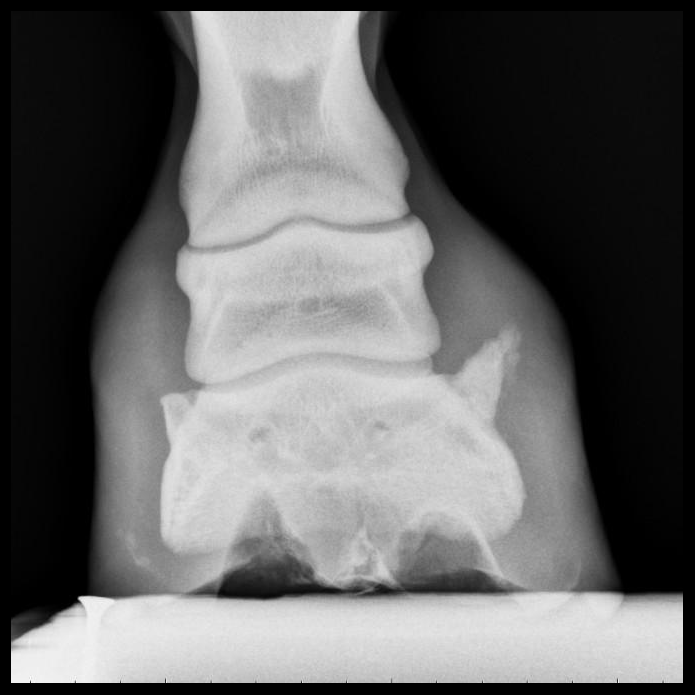
Radiograph of a hoof with sidebone because of deliberate long-term M-L imbalance
Radiograph of a hoof with sidebone due to deliberate long-term M-L imbalance

When a knowledgeable hoof care provider talks about a horse’s hoof being “in balance,” he or she is referring to a hoof making contact with the ground without rocking or twisting in either the side-to-side (medial-lateral, or M-L) or front-to-back (anterior-posterior, or A-P) direction as it comes under load. Why is this an issue? Because any horse that experiences significant movement on surfaces such as hard ground or pavement – particularly at speeds faster than a walk – will eventually suffer from health issues directly related to the extent of imbalance of their hooves. I’ve devoted quite a lot of space to describing the problems related to A-P imbalance in the form of heel- and toe-first landings in The Myth of the Heel-First Landing and Navicular Disease series, so this article will focus on medial-lateral imbalance and its consequences.

Understanding the basic construction of the joints of the horse’s lower limb, and how it differs from our own, is key to grasping why medial-lateral imbalances are so damaging to the horse. Try a little experiment: Stand up straight, and put most of your weight in one of your feet. Now, while keeping your opposite foot flat on the ground, but not shifting your weight onto it, try rotating that foot so the toes point first towards the 10 o’clock and then the 1 o’clock positions on the face of an imaginary clock on the ground under your foot with 12 o’clock being straight ahead. Not much of a challenge, right? Now try the same thing with your hand flat against a wall and your arm parallel to the floor. Again – pretty easy! That’s because in humans, the distal (farther away from our body) parts of our limbs i.e. the forearm and lower leg are constructed to allow that particular type of rotatory motion via the radius/ulna (forearm) and tibia/fibula (lower leg) bone combinations; in essence, their arrangement permits one bone to “spool” over the other.

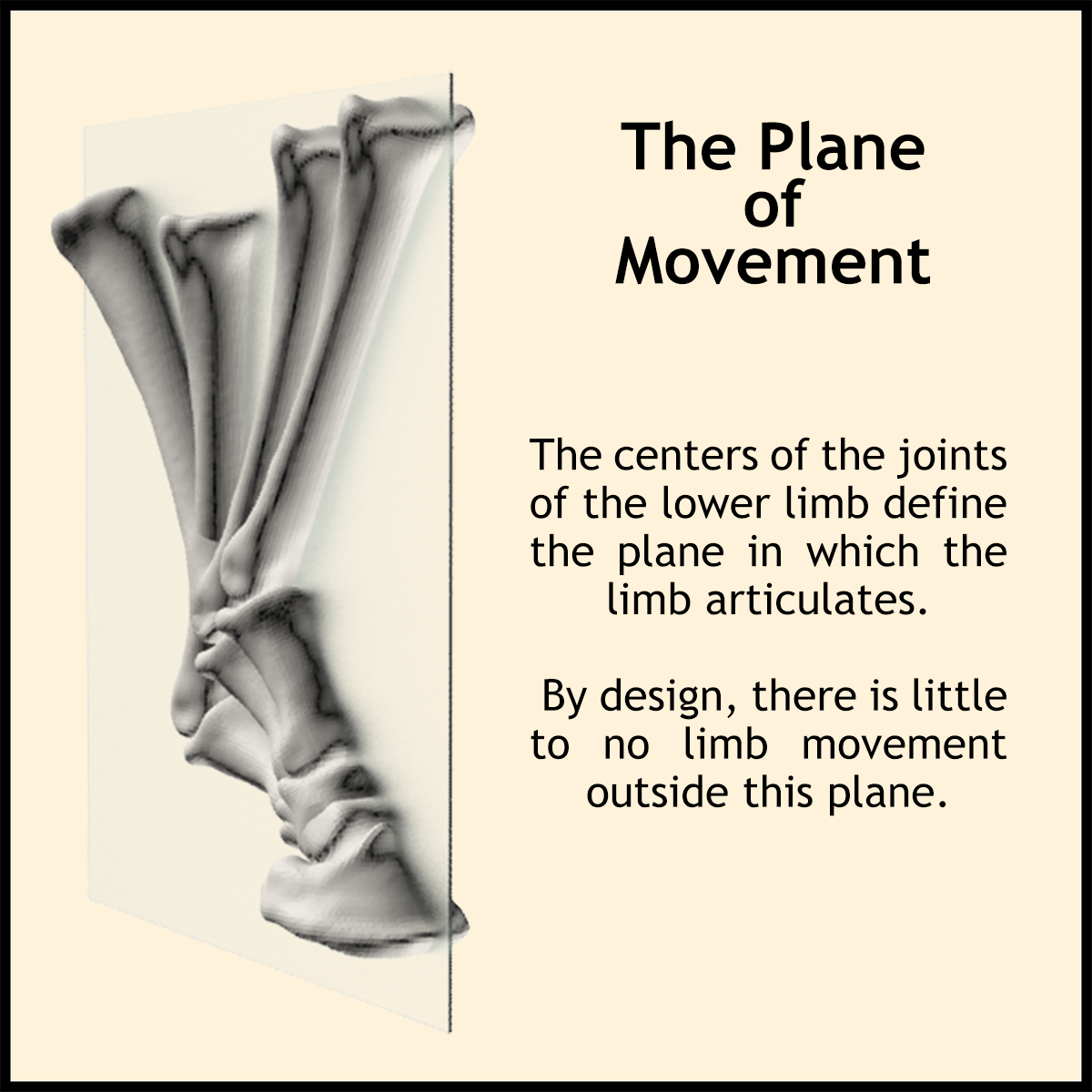
If you then take a trip to the barn, pick up a foot, and attempt to either rotate the foot or tilt the foot from left to right, you’ll quickly discover that neither is really possible. A glance at the bones of the horse’s lower limb reveals why: Unlike our own wrists and ankles, all of the joints below the shoulders and hips of the horse are designed to allow for movement only in the plane defined by the centers of the unloaded and loaded fetlock joint and the center of the coffin joint (the center of the carpus and tarsus i.e. “knee” and hock also lie on this plane), as shown below –

The Plane of Movement

Thus, there is practically no side-to-side variation in how the horse presents his hoof to the ground; on any given surface, the hoof will always make ground contact in essentially the same way. This is very important to the health of the horse’s lower limb. As you can see in the above illustration, if the hoof were to make uneven medial-lateral ground contact, there would be considerable stress on the joints of the lower limb with every step, because they cannot articulate in a side-to-side direction.

Unfortunately, deliberately unbalancing the hoof is extremely commonplace, often advocated by veterinarians and hoof care providers in a well-meaning but misguided attempt to “correct” a limb whose foot points in a direction other than perfectly in line with the horse’s body. These methods leave one “side” of the hoof wall long with respect to the other side to twist the foot as it comes under load, sometimes giving the appearance of a straighter limb when the horse is standing still, as has been attempted by the hoof care provider for the horse in the radiograph at the beginning of this article. Since the “set” of the limbs is determined by the shoulder and hip joints, however, it’s simply not possible to truly correct such a condition through trimming or shoeing; the shoulder or hip cannot actually be changed, and the horse ends up paying a heavy price for the false impression of being “more correct.”

In most of the cases I’ve seen, no actual “straightening” has occurred; the shoulder or hip joint is sufficiently flexible to allow enough rotation of the entire limb from the torsion applied by the foot imbalance as it comes under load to make the toe point more forward while it’s on the ground, thus giving the appearance of a straighter limb. But as soon as the foot is unloaded, the leg “unwinds” and travels in the plane in which it was designed to travel. And in the much-less-common cases where actual limb twisting has occurred, such as when this technique has been carried out on a still-growing youngster, the turn is limited to the bones and joints of the lower limb, leaving a leg whose digit points in one direction but elbow or stifle points in another. The actual plane of limb motion, of course, remains unchanged.

The consequences of smaller imbalances may initially be subtle, and may show up as an unwillingness or difficulty in performing certain movements on harder surfaces, or being a bit “off” after doing such movements. But the damage caused by the stress placed on the joints with every step eventually takes the form of osteoarthritis – deterioration of the cartilage that lines the joint, often accompanied by calcium deposits (bone spurs) around the joint – and lameness. Larger imbalances may result in more pronounced lameness and a definite hastening of joint damage, resulting in career-ending conditions such as articular ringbone. And by the way, the good news for barefoot horses is that minor imbalances will eventually “self-correct” through wear; conversely, the bad news for shod horses is that no such self-correction can occur, and the effects of imbalances are actually intensified by the presence of the shoe.

Interestingly, in the course of writing this article, I had the opportunity to hear not one, but two, stories about so-called “corrective shoeing” that I think are useful to share.

The first was from a woman thanking me for writing Horseshoes: A Means to What End? who mentioned she is a believer in having horses barefoot, and is currently having some “corrective shoeing” done on one of her horses with the ultimate objective of having this horse barefoot as well. According to her, the horse is wearing one side of the hoof wall down faster than the other, and is therefore more comfortable with shoes on.

While this indeed may be true, her implied cause-and-effect between preventing the wear and the horse’s comfort is indeed a tenuous one. There are only two explanations for why the horse would be wearing as she describes: either the foot is not being properly balanced when trimmed, or something higher up in the horse’s limb or body is causing the horse to contact and load the foot in an asymmetrical manner. In either case, merely preventing the horse from asymmetrically wearing the foot by means of a horseshoe is not only not addressing the problem – it’s actually causing damage to the joints as described above. It’s certainly not “correcting” anything! So why is the horse more comfortable with a shoe on the foot? Almost certainly because the sole is being over-trimmed, the sole is not yet properly conditioned to be barefoot on the types of terrain being ridden on, and/or there’s a problem with the horse’s diet – none of which have anything to do with preventing uneven wear. And if one’s objective is to have a barefoot horse, the process of doing so is never going to include a horseshoe; we don’t “prepare” a horse for being barefoot by using what we’re trying to move away from! Sorry – not logical.

The other situation is a woman who’s spent the last year or so following the advice of her veterinarian and farrier to “correct” the turnout of one of her horse’s forelegs through deliberately unbalancing the foot. And now, guess what? Radiographs of the lower limb, which showed no joint damage a year ago, now show significant damage, and the horse is lame. And yet, she still can’t bring herself to accept that her hoof care provider and veterinarian have caused the problem, and haven’t “corrected” anything!

Remember: While the use of a horseshoe to prevent excessive even wear of the bearing surface of the hoof wall may be one thing, using a horseshoe to inhibit asymmetrical wear can only ultimately result in joint damage.

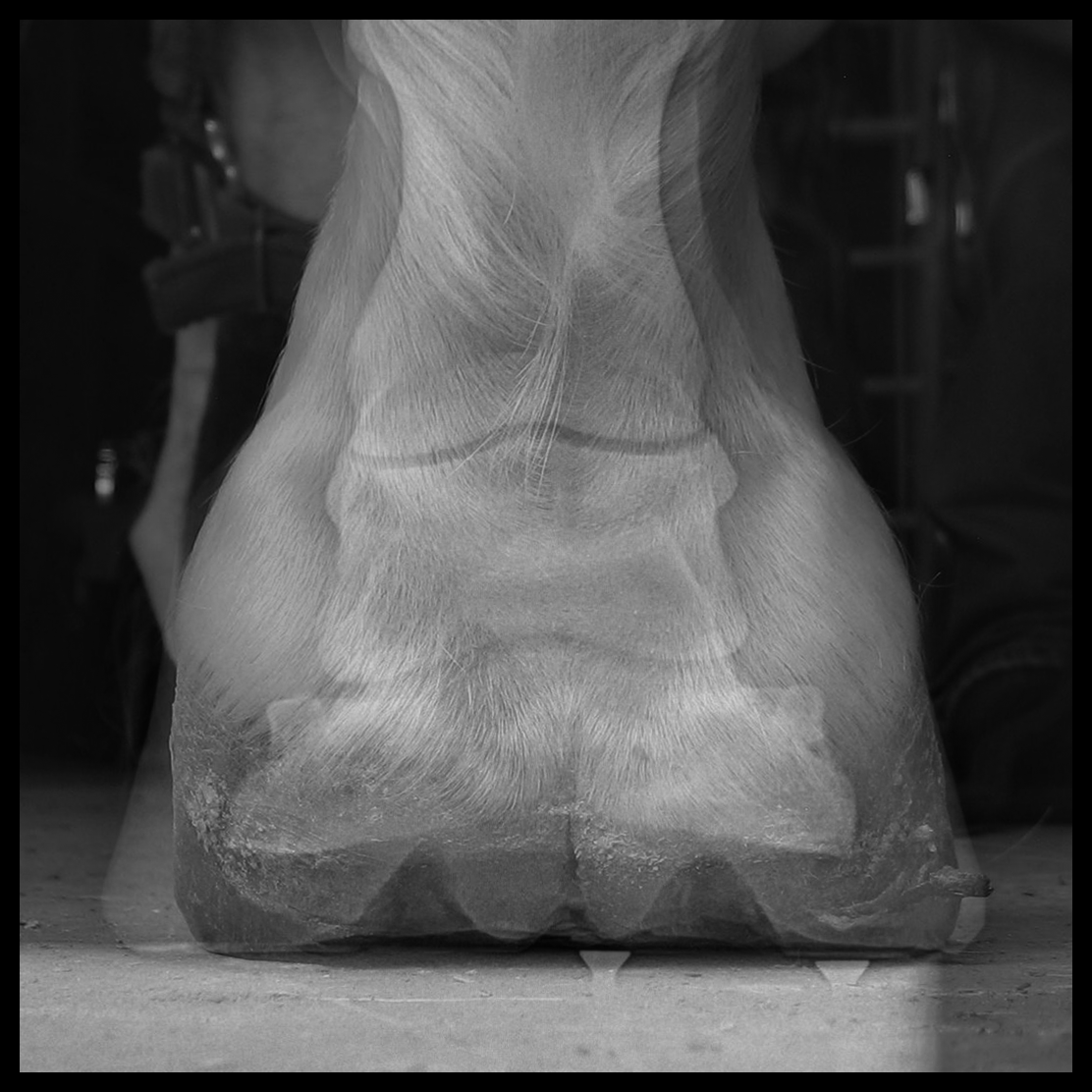
Composite Hoof & Radiograph
Composite image of a photograph and radiograph of a balanced foot

Determining whether or not your horse is in medial-lateral balance isn’t difficult, but it can require a bit of practice to develop a “feel” for it. Be aware, though, that the natural limitations of our vision will make small hoof imbalances difficult-to-impossible to see, especially in the less-than-optimal lighting conditions that are found in nearly every barn in the country!

On an unyielding flat, level surface, such as concrete or asphalt, and with as much light on the situation as possible, carefully watch each of your horse’s feet as he walks both towards and away from you. No part of the hoof or shoe should make ground contact before any other part, and there should be no rocking or twisting as the foot is loaded, although some horses will twist a (usually hind) foot just before it leaves the ground. Listening to ground contact is even more useful; the sound of a balanced foot will be distinct, with no “double-tap” or “smearing” evident. And slow-motion video is an even better and more definitive method: Video your horse at ground level from the front and back, and then either slow the video down to about 1/5 normal speed or step through each hoof contact frame-by-frame to determine if the feet are making even contact.

In addition to visual and aural observation of hoof landings, horse owners and hoof care providers can develop an “eye” for balance by understanding the relationship between the coffin bone and hairline at the heel bulbs. As illustrated in the composite image above, both the hairline at the back of the foot and the bottom of the coffin bone are M-L ground-parallel in an M-L balanced foot for the vast majority of horses. In rare instances (in my experience), the hoof capsule/coffin bone of certain hind feet will not be ground parallel, but will be tipped very slightly toward the lateral side for a proper (flat) landing; this, however, can only be determined by properly balancing the foot initially, and then carefully observing the consequent landings and adjusting the trim if necessary.

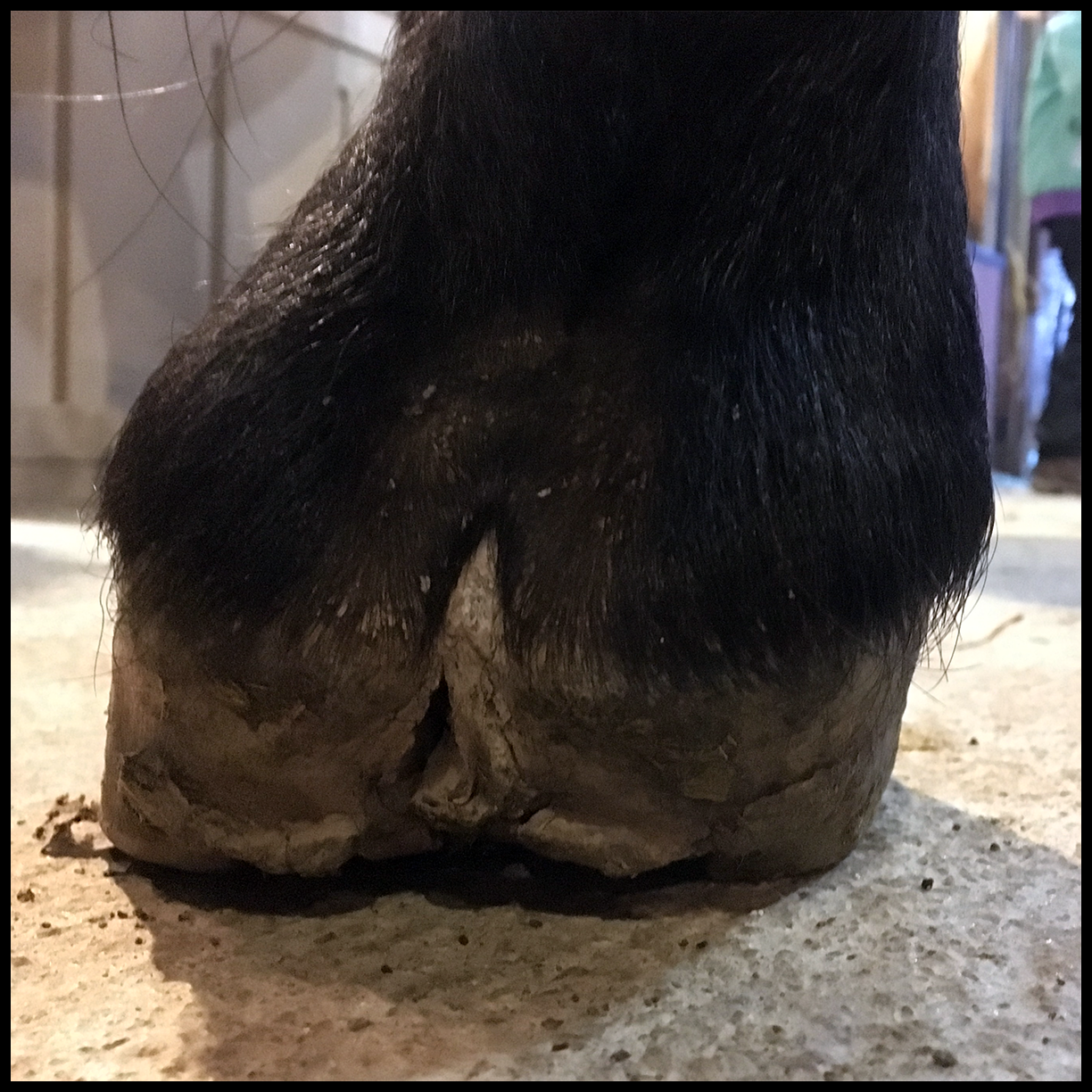
A potentially more serious imbalance condition referred to as sheared heels can occur when one heel buttress is left chronically long with respect to the other of the same foot. Rather than the entire foot tilting one way or the other, the entire half of the hoof capsule with the longer heel may instead end up vertically displaced with respect to the other. Although some limited research by others shows that the actual coffin bone position in these imbalances apparently remains unchanged because the coffin bone only occupies a very small part of the back part of the hoof, this type of  imbalance can nevertheless cause severe lameness, promote wall cracks, and contribute to frog infections, and should therefore be taken seriously. Although the horse in the following two photos taken before his most recent trim has been under our care for a relatively short time and has greatly improved, the evidence of years of improper M-L balance remains in the form of a “shoved up” lateral heel and quarters –

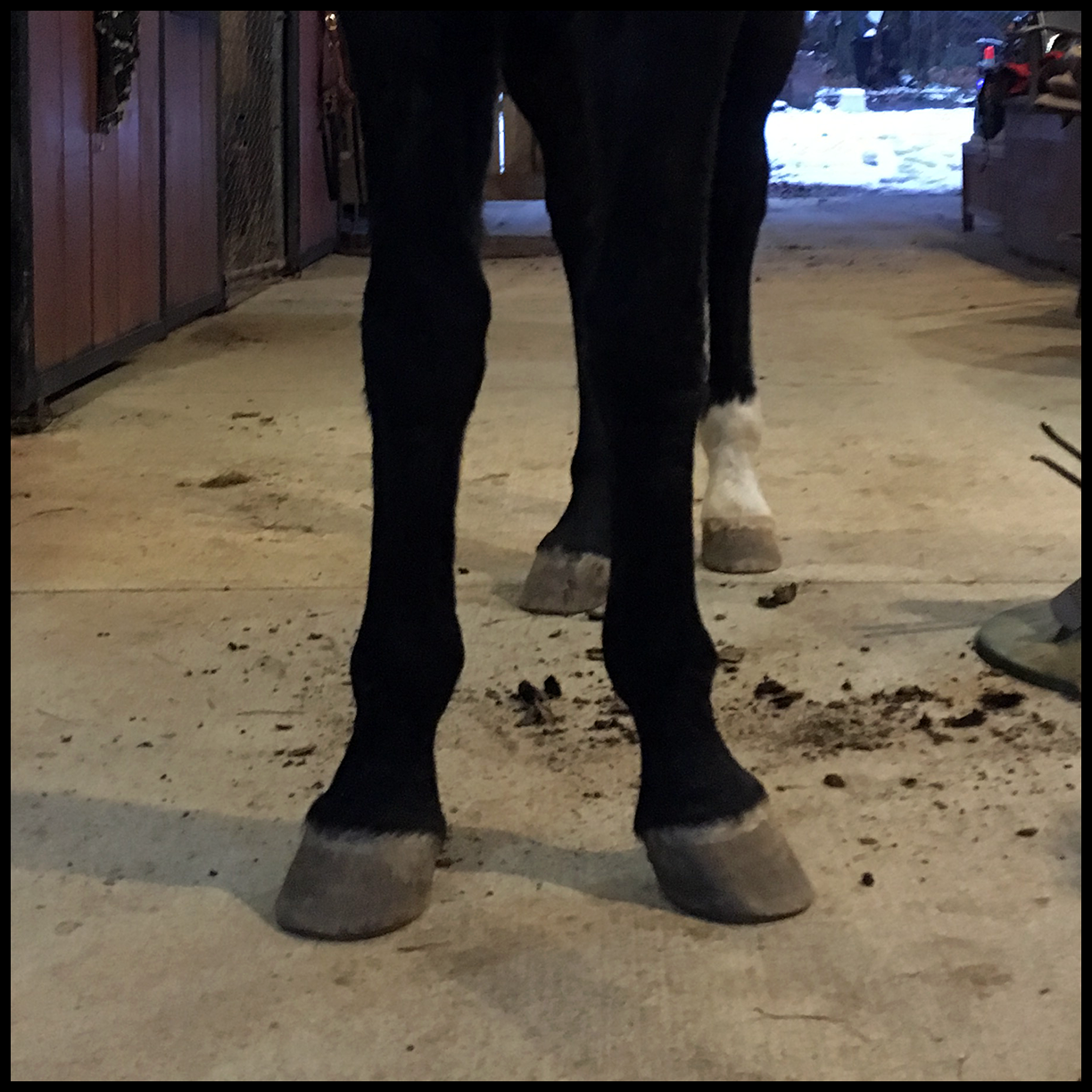
Photo of splay-footed horse
Horse with profoundly – but naturally – turned-out forelegs. Note that the carpus (“knee”), fetlock, and toe of each foreleg all point in the same direction.
Photo of sheared heels
…and a rear view of the left foreleg. Although some would consider this foot properly balanced because the heel buttresses and toe define a plane reasonably perpendicular to a vertical plane passing through the central sulcus of the frog, the hairline (among other things) indicates that the entire lateral side of the hoof is, in reality, (still) a bit longer/higher than the medial side. A work in progress, with some distance yet to go…

If the hoof had continued to be improperly trimmed, the hairline on the longer-heel side of the foot would have continued to be shoved upward. Imagine facing the horse and wrapping your hands around each side of the hoof – fingers on the bottom, with your palms against the sides of the hoof wall – and twisting in a vertical direction; that’s exactly what has happened! Yet, because many hoof care providers are taught that a foot is in balance if the bottom of the heel buttresses describe a plane 90° to the so-called “median plane” – a vertical plane passing through the apex of the frog and continuing through the central sulcus of the frog (i.e. through the “middle” of the foot – see the plane shown in “The Plane of Movement” graphic above) – they fail to recognize this form of imbalance.

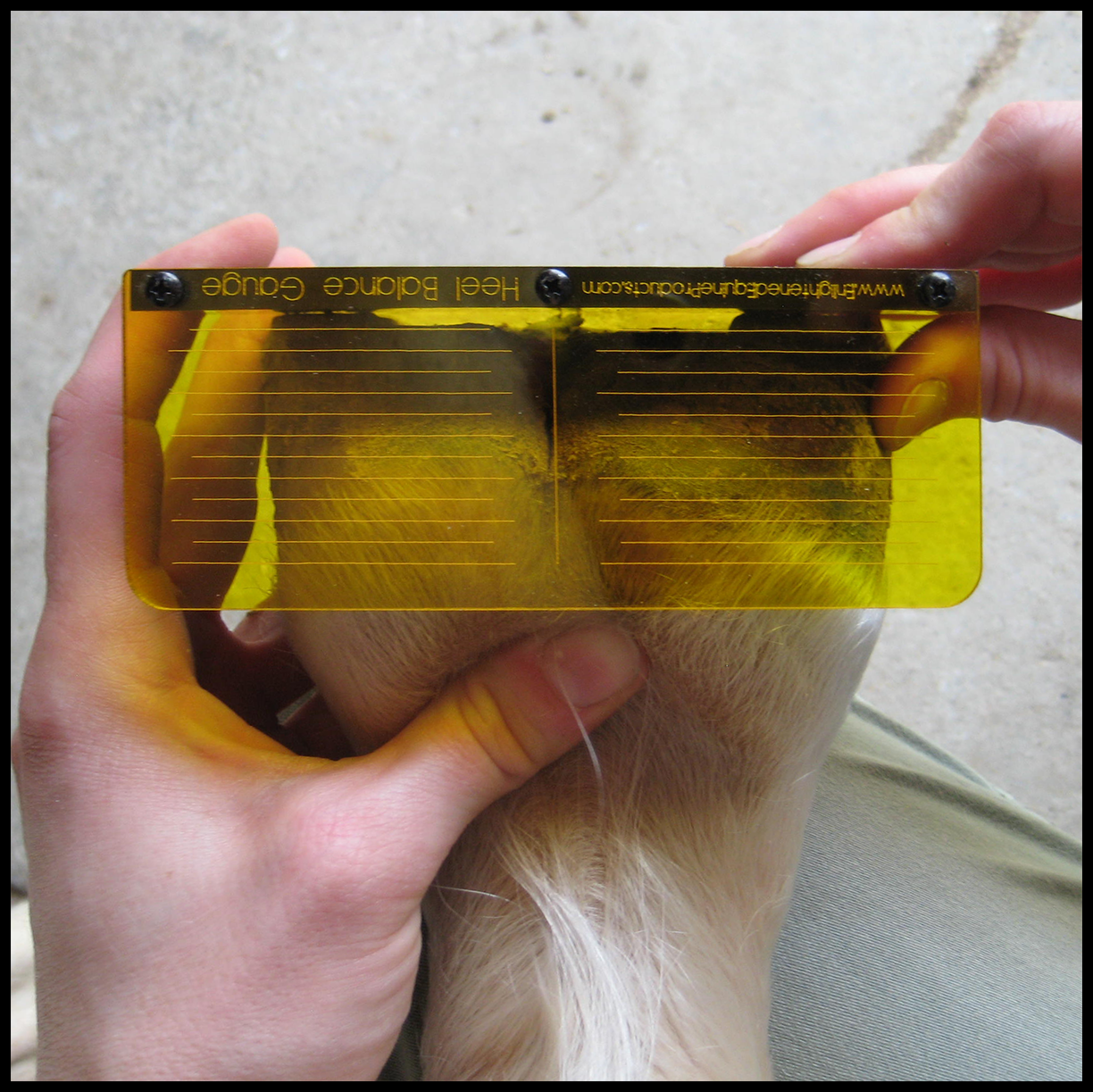
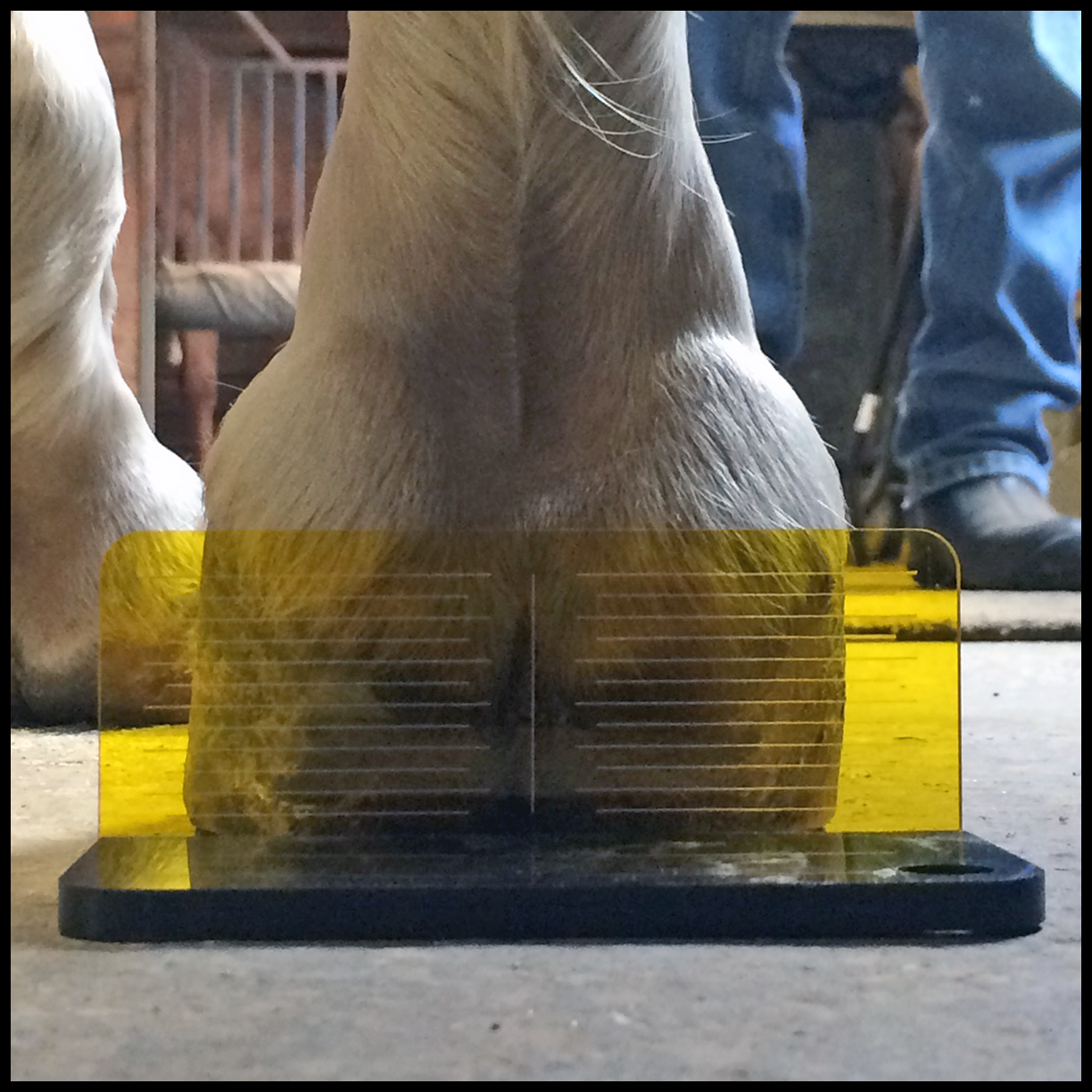
To help check M-L balance, I’ve developed a simple tool that will allow both horse owners and hoof care providers to easily determine if a horse’s hoof has been properly trimmed. As shown in the photographs below, this Heel Balance Gauge can be used in two different manners to determine whether or not the heel buttress height is equal.

Heel Gauge - In Air
Heel Balance Gauge being used directly on the bottom of the elevated hoof
Heel Gauge - On Ground
Heel Balance Gauge being used on the ground behind the hoof

Eliminating M-L hoof imbalances can be challenging – not because of the actual trimming involved, but because many hoof care providers are simply unaware they’re not properly balancing the hoof, and the ones that are deliberately unbalancing the hoof are usually convinced they’re doing the right thing! So while it may be possible to explain to your hoof care provider that you want your horse’s feet to be in balance, it may ultimately be necessary to change hoof care providers to actually accomplish that objective. But your horse will thank you for it – by performing better and by staying healthier for a longer time!

“No one ever suggests we use some sort of tire to fix a crooked truck axle. Why would anyone suggest we use some sort of horseshoe to fix a crooked horse limb?” – Steve Hebrock