Over the past several years, I’ve seen a considerable number of lame horses that have been diagnosed as having one problem or another but in reality have a very different one. And a visit a few weeks ago was no exception. I went out to trim a horse who’d been diagnosed with sidebone – the horse I mentioned in the post entitled What Makes it “Natural Hoof Care?” – and discovered that while he does, indeed, have some sidebone palpable in the lateral lateral cartilage (the one to the outside of the hoof) of one of his feet, it’s not his biggest problem at the moment.

Sidebone, just to remind you, is caused by excessive unilateral concussion – the horse repeatedly banging down on one “side” of his hoof. Since this horse’s conformation is such that his front feet point slightly toward the outside (as many do, especially in the hind legs), I’m sure someone tried to “fix” him by leaving the lateral (outside) wall longer than the medial (towards the horse’s mid-line) side. That’s the “time-honored method” advocated by many veterinarians and used by farriers everywhere to attempt to straighten “problem” legs.  In reality, the only thing it’ll straighten is your wallet as you open it to pay for work that ultimately compromises the long-term (and sometimes short-term) soundness of your horse! You cannot fix at the ground that which originates in the shoulder or hip. Unbalancing a hoof can only cause harm.

That said, I seriously doubt this horse’s sidebone will prove to be much of an issue at all, but we won’t know until the more immediate (and, unlike the sidebone, treatable) problem is resolved.

This horse, like the one I described in Progress!? and Progress Update!?, has a fairly serious infection in the central sulcus of the frogs of both of his front feet. If unrecognized and untreated, these infections can go deep into the frog, invading sensitive tissue and rendering the horse quite lame. Of course, that always leads to the question of how/why the veterinarian and farrier missed such an obvious (at least, to me) problem. I’m not, by the way, critical of the horse owners in such circumstances, because: 1) I have no reason to believe horse owners should necessarily recognize what’s normal for a hoof, and 2) I understand why owners assume they can rely on their vets and farriers to recognize what’s normal for a hoof.

How can you tell if your horse has such an infection? Well, in a healthy hoof, the central sulcus isn’t very deep; it generally looks more like a fairly broad “dent” in the middle of the frog, as if someone had pushed his/her thumb into it. Check out the photos in some of the other posts to see what I mean. The infected frog, on the other hand, has a very deep groove, hole, or “split,” often extending out the back of the frog. The hoof pick will go deep into the groove – a half-inch or more – and bring up a malodorous black “goo.” The horse will usually react to the pick, since the infection has invaded sensitive tissue, so be careful! A sure sign of the problem is when you note a dark line running from the back of the frog up between the heel bulbs and above the hairline. The central sulcus of a healthy hoof will never extend above the hairline. This can often be seen while the hoof is still on the ground, especially on horses with white legs. And scar tissue is often visible on horses who’ve had this infection in the past, appearing as a hairless line or inverted “V” above the hairline between the heel bulbs. The following two examples are of relatively minor cases; the horse in the first two photos is not yet showing any lameness, while the horse in the third photo is beginning to show a mild lameness. These were taken on my first visit: the first two post-trim, while the third before any work was done –

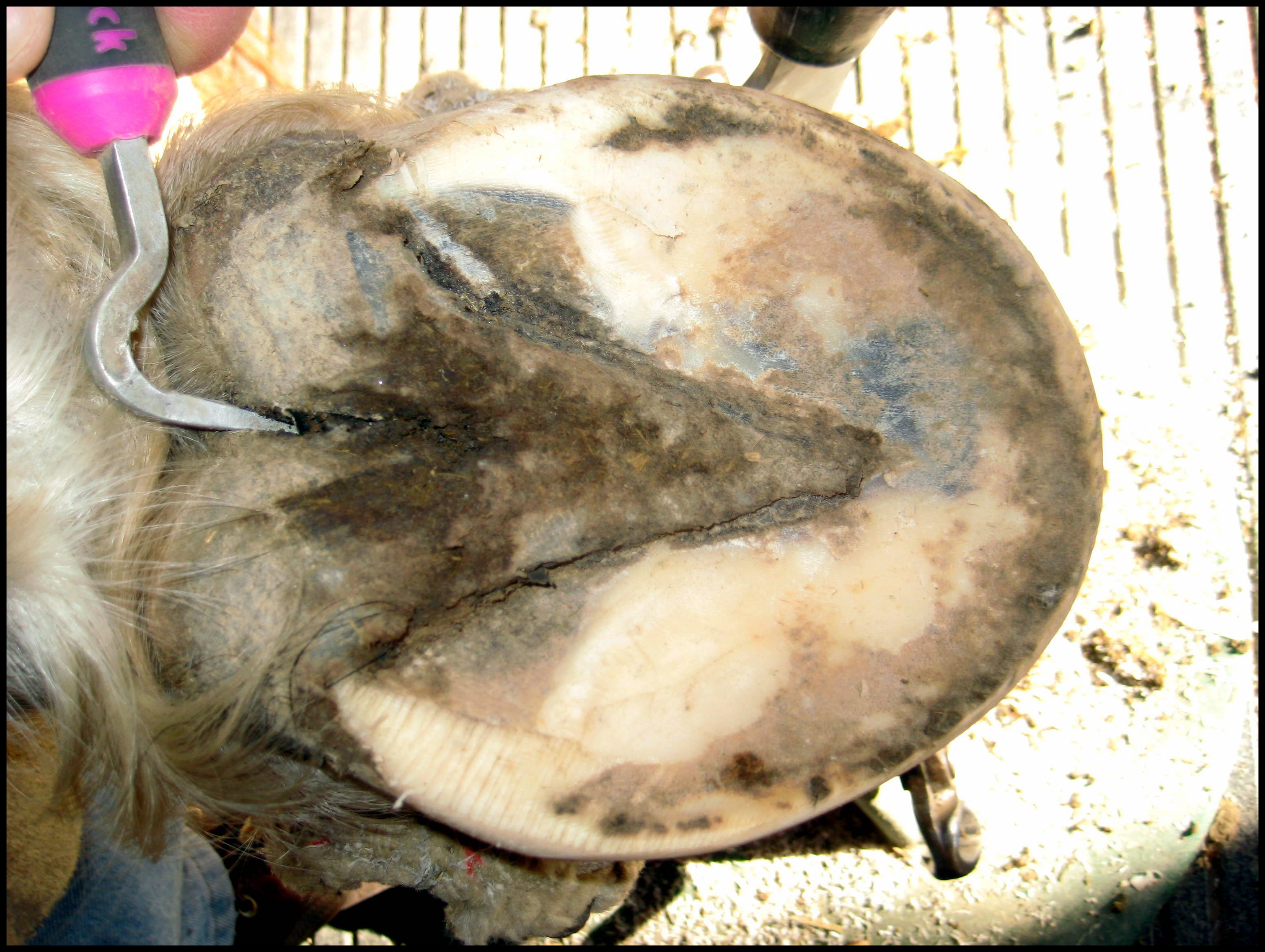
What, exactly, causes it? I don’t know for sure. But what I do know is that it’s most common during wetter times of the year, and that only certain horses in a group will get it, even though they’re all standing in the same mud. Clients ask me if it’s thrush, and I honestly don’t have an answer to that question because I’ve seen equine medical books describe thrush as both a white fungal infection of the frog and a black bacterial infection of the frog. In people, thrush is definitely a white fungal infection (of the mouth and tongue), so my inclination is to say “no, it’s not thrush.” There are a tremendous number of organisms – of all types – present in the soil, and I have no idea which one or ones are responsible for these infections. I do believe it’s bacterial, however, because it definitely responds to certain antibiotics.

It’s usually fairly easy to treat, although it can take a long time for the damaged tissue to regrow. Bearing in mind that I’m not a veterinarian, I generally have clients begin treatment with liquid Lysol mixed according to the bottle directions, and sprayed or poured onto the clean affected area once a day for 2 weeks. Depending on the severity of the infection, I also sometimes recommend making an effort to keep the foot dry with (preferably) a boot or limited turnout. After 2 weeks, there should be a noticeable improvement – the odor should be gone, sensitivity should be reduced, and new tissue growth should be apparent. If not, then I recommend the daily application of either of two over-the-counter topical antibiotics made for bovine mastitis called “Cefa-Lak ToDAY” or “Cefa-Dri ToMORROW” for 2 weeks. My clients report great success with this drug; as long as the horse isn’t perpetually reopening a very deep wound through the natural heel expansion that accompanies movement, there will be a definite improvement. In very severe cases, we’ve also had to restrict either movement (through stall rest) or hoof expansion (using boots) to get the wound to remain closed and heal.

One thing I don’t recommend is using some of the harsher chemicals people often use on feet, like chlorine bleach. It’s important to kill only the disease-causing organisms, and not new tissue growth. And, so far, the treatment outlined above has worked just fine, so my advice is to stick to it.

These cases apparently baffle many veterinarians and farriers, and every case I’ve seen has had at least one of each look at the horse prior to my involvement – sometimes several of each. Besides the sidebone case mentioned here, other misdiagnoses include laminitis/founder, pedal osteitis, and “navicular.” In a number of cases, the problem has been somewhat masked by shoes, often with full pads. Covering the sole with a pad, especially in conjunction with silicone poured between the sole and the pad, is particularly problematic because it traps moisture and seals out air, making a practically ideal environment for the offending (and often anaerobic) organisms to thrive.

So the next time you hear of a lameness issue, maybe you can pass this on to the horse owner. The real cause may end up being a relatively pleasant surprise!
If you’re around the horse world long enough, you’re bound to hear people talking about breakover. What, you may ask, is breakover? Well, there are two definitions. The first, as defined by Dr. Hilary Clayton in The Dynamic Horse, is –

Terminal part of stance phase during which the heels of the hoof rotate around the toe, which is still in contact with the ground

In other words, breakover, or breakover time, is the amount of time it takes for the hoof to actually leave the ground after the heels have lost contact with the ground. The second definition, also referred to as the breakover point, is the physical location of that rotation “point” on the bottom of the hoof.

Some horse people get quite caught up in trying to hasten breakover (time) by attempting to move the breakover point farther back towards the horse’s heels. In fact, there are many, many shoe designs that purport to do exactly that – hasten breakover by shoes with modified toes. And yet, according to the notes of Dr. Clayton’s presentation at the Wild West Veterinary Conference in October 1997 entitled Farriery Manipulations – What Works? –

For horses trotting on a hard surface, the duration of breakover was no different for a rolled toe, a rocker toe or a square toe compared with a flat shoe (Clayton et al., 1991). Willemen et al. (1996) also evaluated the effect of rocker toed shoes in sound horses and failed to find changes in breakover, the flight arc of the hoof or tension in the DDFT (deep-digital flexor tendon) at breakover…

Therefore, based on the data (which, I might point out, has been around for 20 years), it would seem these shoe modifications fail to live up to their claims. Yet this persists as a very common misconception about a commonly-used type of shoe. The only thing Dr. Clayton found that improved breakover, according to personal communications with me in the mid 1990s, was keeping the hoof as short as possible. Sounds like yet another “plus” for barefoot to me!

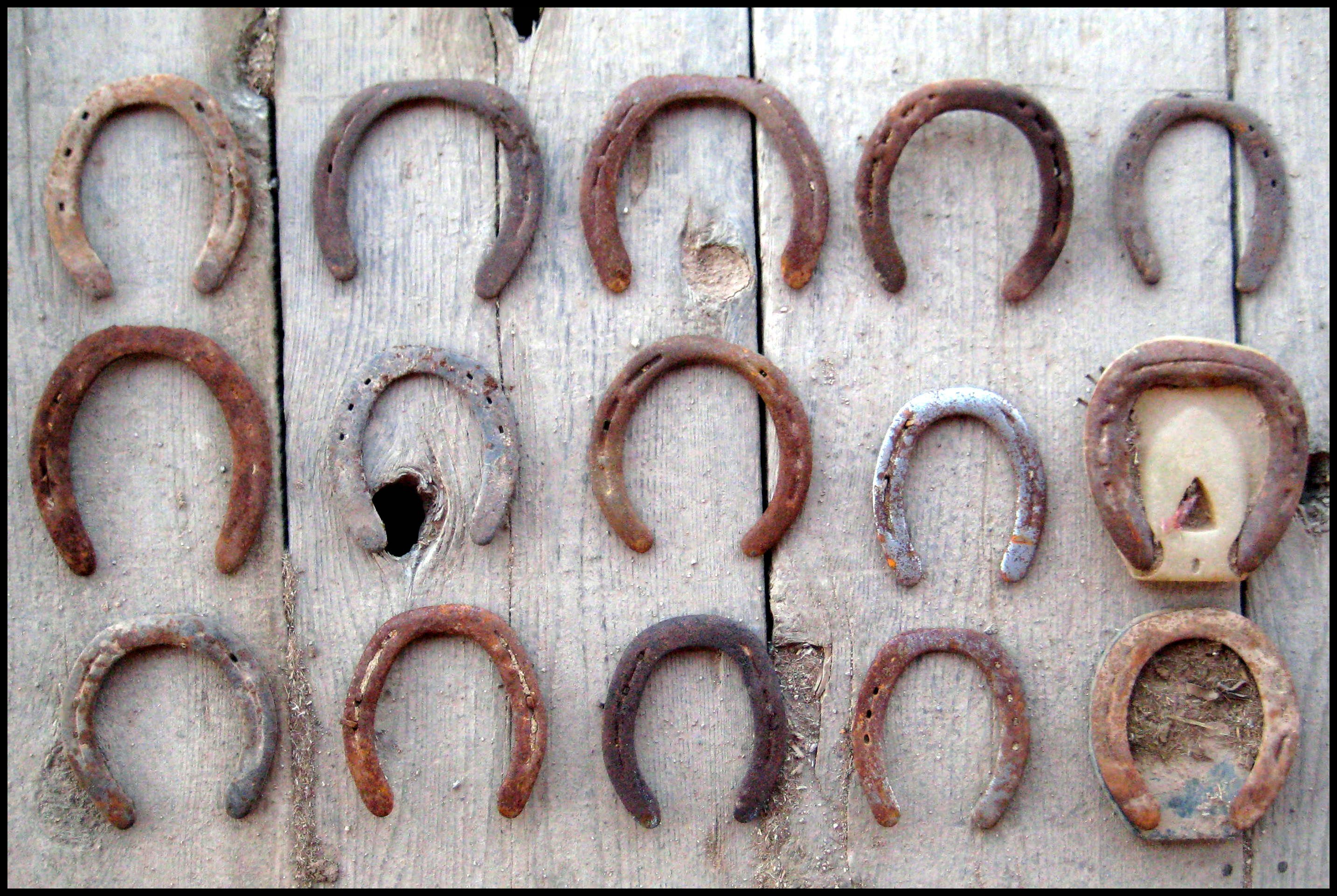
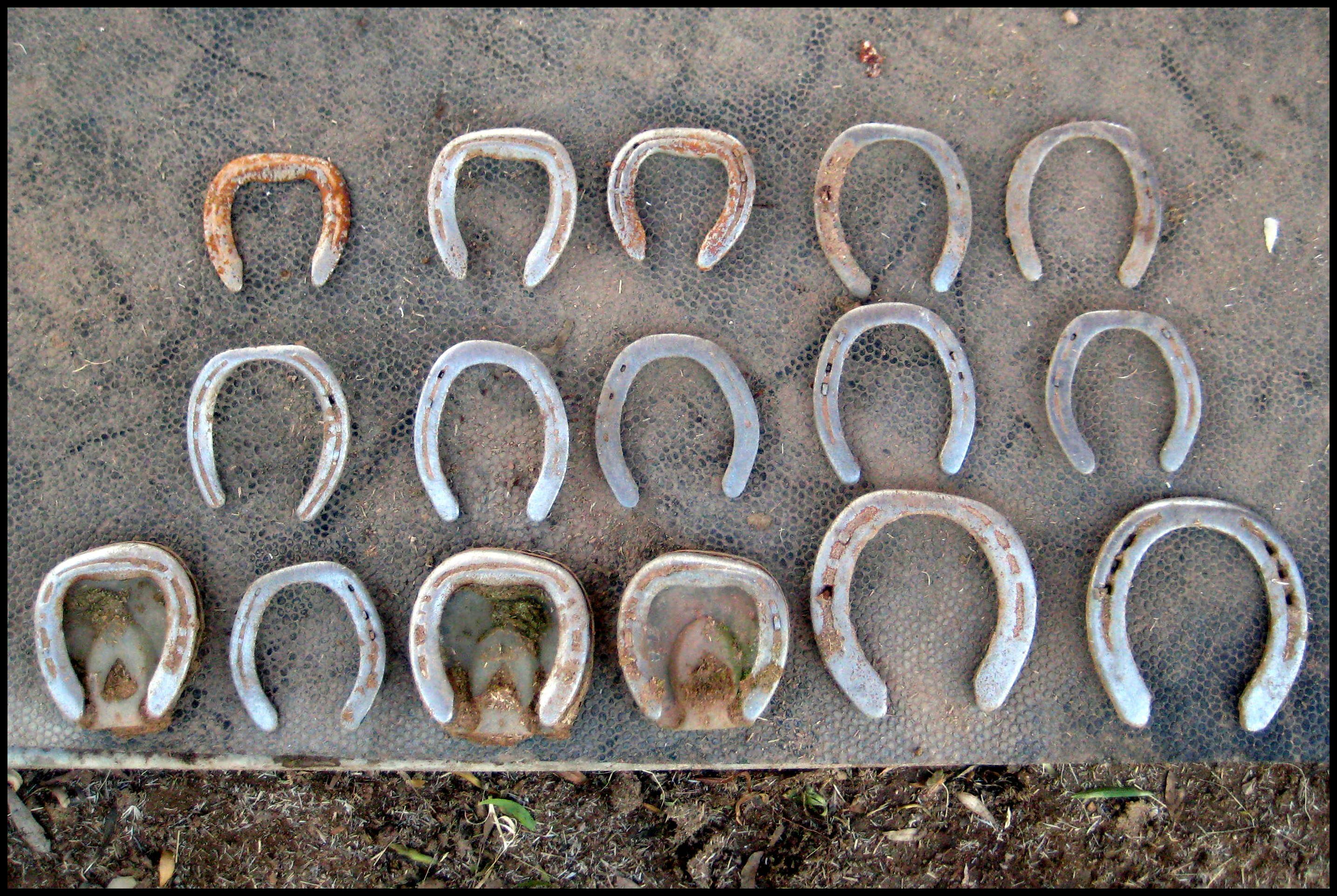
And while I did want to share that general information with you, I mostly want to talk about another consequence of using shoes with modified toes. While at the White Stallion Ranch at the end of last month, I decided to take a look at the wear pattern on some of the horseshoes that had been removed and tossed aside. Although, strictly speaking, I didn’t utilize a proper sampling plan, I searched through several dozen shoes and pulled out all of the ones exhibiting any wear at the toes, regardless of the wear pattern itself. So the sample is representative of wear patterns, but not representative of all used shoes.

Why did I want to mess with at a bunch of old, rusty shoes? Because I’ve noticed before that shoe wear tells a very important, yet apparently ignored, fact about equine movement. So, having now explained breakover, let’s take a look at these two photographs of worn shoes –

Notice anything interesting? Here’s what I see: of the 31 shoes collected, at least 22 of them (71%) clearly demonstrate that breakover does not happen squarely over the toe! As you can see, in more cases than not, the wear isn’t symmetrical about the toe of the shoe.

What happens when a horse that doesn’t break over squarely at the toe wears a shoe that attempts to force him to break over at the toe? Stress, that’s what! With every step, the limb attempts to carry the hoof off the ground in one direction while the shoe tries to force it in another. And that translates to unnecessary strain on the coffin, pastern, and fetlock joints, especially as the speed of the horse increases, because those joints just aren’t designed to articulate in that manner.

So the lesson is this: if you genuinely want the best possible movement from your horse – the fastest breakover, the least stress, and the most shock absorption (more on that one later), keep the hoof bare and properly trimmed. Ignore those who try to convince you otherwise, and point them to the data. It’s every horse’s best chance at long-term soundness.

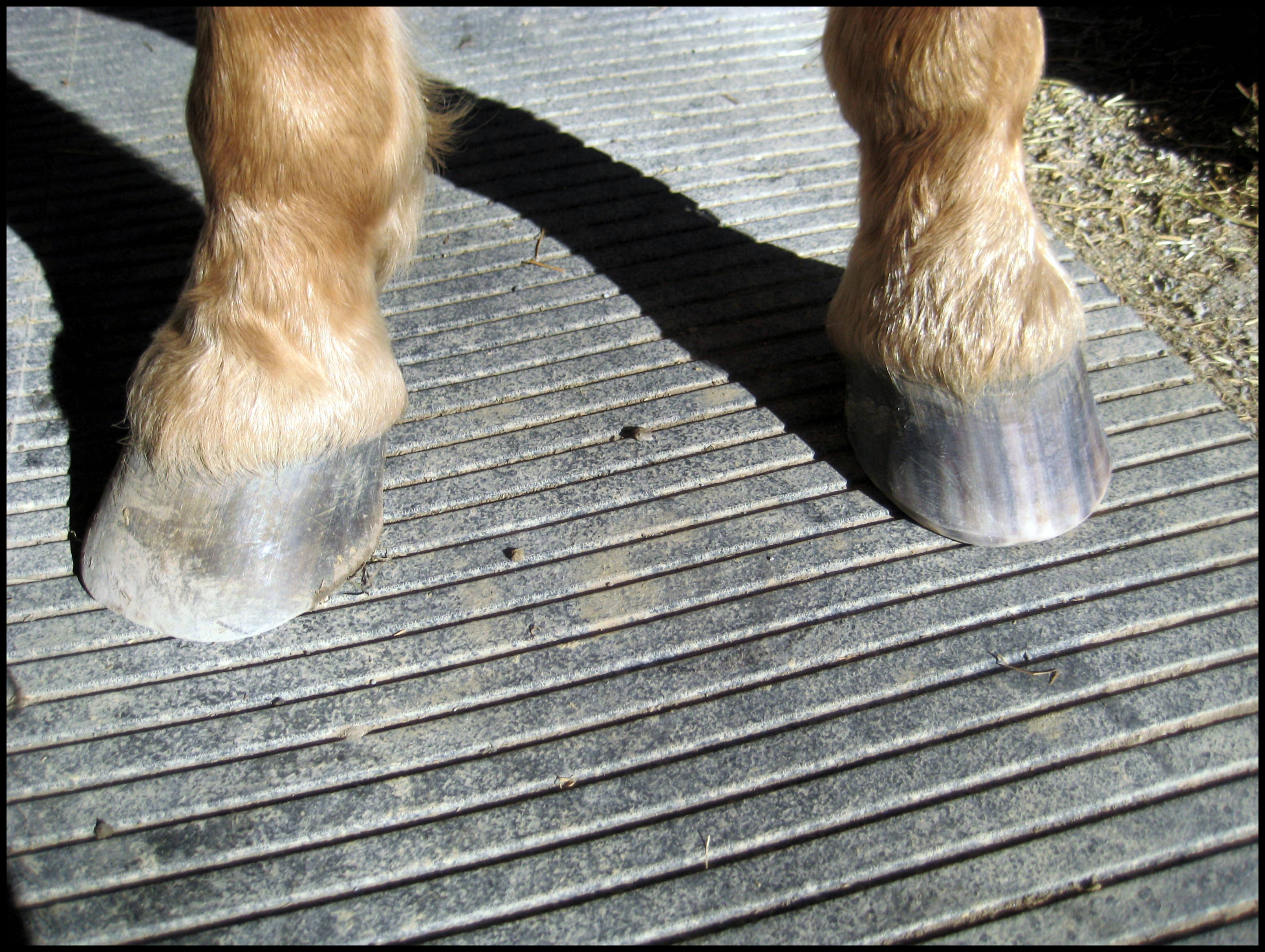
This is just a quick post to share a couple of photos of one of my client’s new horse’s hooves. Both hooves started out looking like the one on the left (his right front), but the one on the right has now been trimmed. It’s always great seeing a beautiful hoof form emerge! With respect to the bottoms of his feet, he’d obviously been receiving fairly good, consistent, hoof care. He just needed a bit more help on the top side to even out the extra wall thicknesses…


Andy and I just want to say “Thanks, and Merry Christmas” to all of our wonderful clients and friends! It’s certainly been a very busy year. Between caring for clients, teaching 25+ classes at Ohio State, and visiting Annie in Massachusetts, I’ve barely had time for anything else. Still, I was able to get this website going, and hope to share even more interesting and useful information with you in the coming year, so stay tuned!

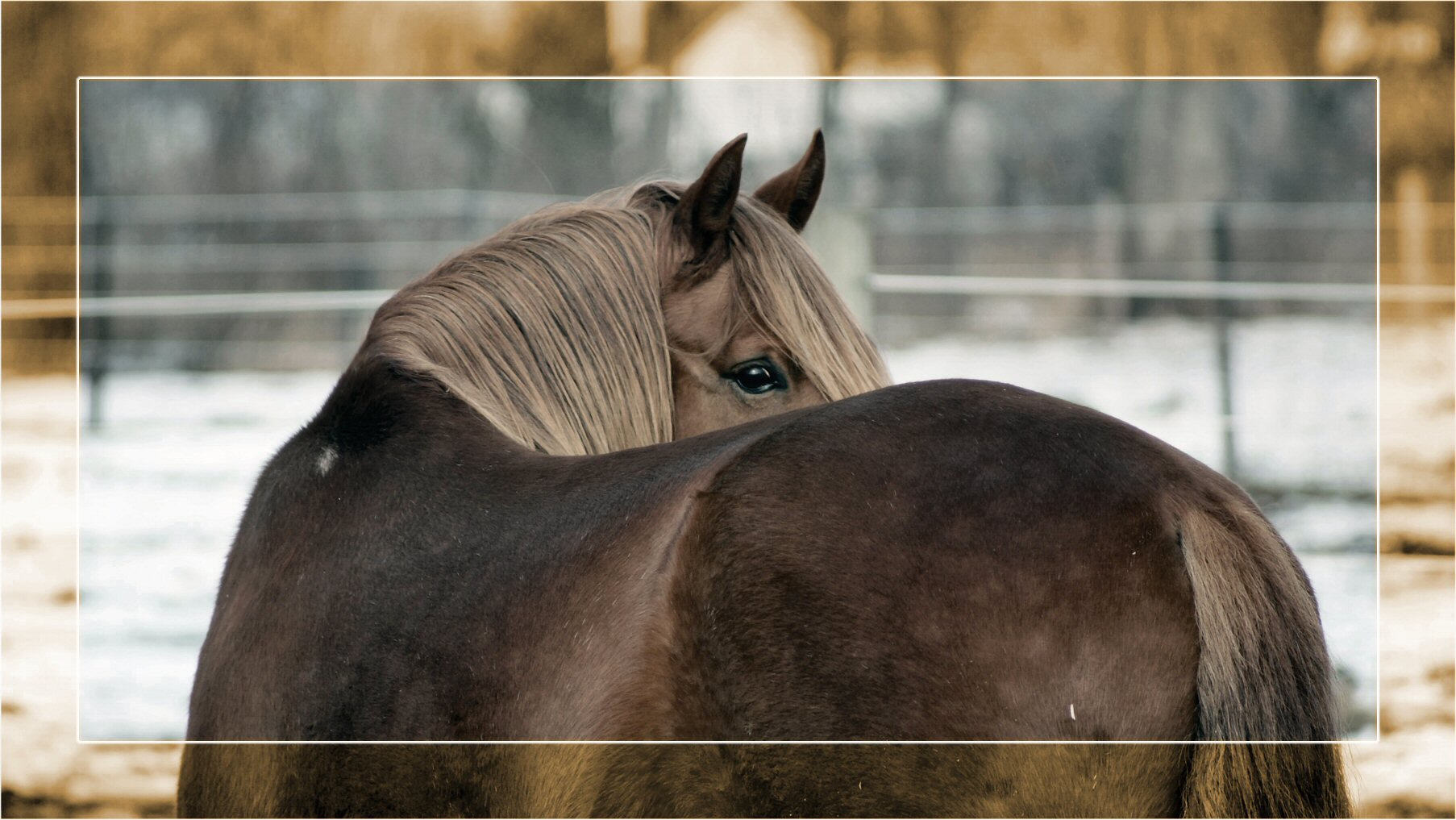
People often ask about the photo on the blog banner and on my new business card, so I thought, as a small gift to you, I’d post the entire photo, along with another, for you to use as a screen saver or desktop background. Both are sized for widescreen monitors. But – if you pass them on to your friends, please be sure to credit me for the photos!

Andero, as some of you may know, is an 11-year-old Peruvian Paso gelding from northern Louisiana whom I purchased in mid-2006 after my first Paso passed away. Peruvian Pasos are fairly uncommon, especially in the northeast and midwest, and are not the same breed as their cousin the American Paso Fino. Although they’re both so-called gaited breeds, the Peruvian Paso has only Spanish horses (and no Thoroughbred) in its lineage, is generally a bit larger and coarser than the Paso Fino, and moves with more forward motion. These horses are bred to be fine riding horses, and are not particularly well-suited to other equine activities.

I’m looking forward to seeing each of you in the new year. Among other things, I plan on doing several clinics as well as posting on a more regular basis. Meanwhile, I hope you enjoy the photos, and have a great holiday!

One of the many benefits of proper natural hoof care, as I’ve touched on in the past, is the way the hooves tend to retain their shape as they grow. The majority of my clients comment that before beginning natural hoof care, they knew when their horse was due for a trim by the presence of chips, splits, flare, and/or other commonly-cited indicators of excessive length. But in reality, these seem to be indicators more of the combination of improper trimming and excessive length. While it’s absolutely the case that an excessively-long hoof may have a chunk or two of the excess wall broken off if the horse comes down on a rock in just the right way, I more often encounter hooves like the following –

This young horse, who’s been a client since his very first trim, had an extra 12% – 16% of his hoof length as new growth, yet his feet looked remarkably good (albeit extremely muddy!). Notice how even the growth is, with no evident asymmetrical wear. This isn’t because he was born with “good hooves;” these hooves have been created by an owner who understands the importance of good nutrition, adequate exercise, and proper environment, coupled with trimming in accordance with how the horse moves. And since he’s moving and landing properly, the hoof continues to grow and wear evenly.

When hooves are trimmed to the correct length and properly balanced, which includes the application of a “mustang roll” on the outer edge of the bearing surface of the hoof wall, the mechanical forces that oppose efficient movement are minimized. In other words, because we’ve removed the hoof material that “gets in the way” of the horse moving properly (as nature will do, given the right environment), plus made certain the hoof is landing with minimal impact, the hoof has no “reason” to break or distort. And I suspect that the minimal-impact landing, which evenly distributes the forces of impact, is particularly important because, I think, the increased localized stresses of an unbalanced landing probably cause structural damage at the lamellar level that result in localized hoof wall weaknesses, predisposing the hoof to chips, cracks, and other distortions. Here are the “after” photos of the same foot; a little cleaner and a lot shorter –Can anything disturb this situation? Of course. If the horse is living in an excessively-wet environment, particularly a urine-laden one, the quality of growth can be adversely affected. And if the horse is eating too many calories for the amount of work he/she is doing, inflammation of the laminae (laminitis) can damage the integrity of the coffin bone-hoof capsule junction. But, in my experience, the hooves of a horse receiving proper trimming will tend to maintain their shape long after they’re due for a trim.

Your horse, too, can have healthy, properly-functioning, and beautiful feet!