Neal Valk

While in Tennessee recently, I had the opportunity to spend a few minutes with Dr. Neal Valk, a board-certified veterinary surgeon, friend, and fellow clinician in Liberated Horsemaship’s hoof trimming training program. I’ve known Neal for six years now, and continue to respect and appreciate his contributions to my knowledge base when it comes to a veterinarian’s perspective on hoof care, which is his specialty. In fact, he is the only veterinarian I’ve met to date in whom I have complete confidence when it comes to matters of the hoof, and, should a horse of mine ever require hoof surgery, Neal would be the first person I’d talk to. And that’s why I refer to him as “The Vet” – because Neal’s made it his mission to go way beyond the boundaries of his veterinary education and undertake an in-depth study of the equine digit.

I asked Neal if we could do a very quick interview, because although I’ve now heard him express his opinion on these matters many times, I thought it would be more appropriate for my readers to hear it “from the horse’s mouth,” so to speak. So here are a couple of quick questions I put to “The Vet” –

Steve: As a board-certified surgeon, you’ve had training far and above what “normal” veterinarians have had. I’m curious: could you describe your education, specifically about the equine foot, and what you’re taught about the equine foot in vet school?

Dr. Valk: In veterinary school, beginning in the very first year while studying basic equine anatomy, we learn a lot about the anatomy of the foot, internal and external. We learn about the physiology of the foot – the nerve supply – and that’s pretty much it. As we proceed in veterinary school, we take courses in pathology, where we learn to recognize pathology at a microscopic level. And when we take courses in radiology, we’re taught normal radiology of the equine foot, and then we’re taught what abnormal looks like; we’re taught what pathology looks like on radiographs. As we proceed further into species-specific classes – musculoskeletal, for example, is the course where we learn about lameness and everything that has to do with the musculoskeletal system in the horse – we again touch on anatomy and speak more specifically about pathology as it pertains to the live animal, and do a bit of work with learning how to test – how to diagnose – pathology. It’s very pathology-oriented. And in the final year, in clinics, we actually see the horse’s feet, and do some hands-on work: hoof testers – that sort of thing. We do some nerve blocks; again, diagnostic procedures to try to identify pathology, which, in most cases, ultimately leads to radiographs, looking for more pathology.

Steve: So you don’t really receive a lot of formal education about what “normal” looks like in a foot, with respect to trimming or the form of the foot?

Dr. Valk: No. At least when I went to veterinary school, there was no mention at all of hoof maintenance or trimming or anything like that. At the clinical level, the final year on our clinical rotations, we talked about “corrective shoeing” for, again, pathology or certain pathologies. But no, we didn’t have any instruction on hoof maintenance or that sort of thing – not with horses. I remember having that with cattle, ironically, but not so much with horses. I certainly wouldn’t say that we worked with any normal feet. Pretty much everything that came through the clinic was abnormal for one reason or another; at least, that is, based on my view now. But I don’t remember having any kind of formal instruction in farriery. It was basically, well, “this is the pathology, that means this is the diagnosis, this is the disease, and ask the farrier to do this,” and that’s kind of the way we handled it.

Steve: Sort of a “cookbook.”

Dr. Valk: Yeah. Really no hands-on, as far as the horse’s feet went.

Dr Neal Valk

Steve: And these days, as a practicing veterinarian and as a practicing natural hoof care provider, are there circumstances where you recommend, you know, “this is pathology, and you’ve got to put a shoe on it”? Contracted tendons or laminitis or navicular disease? Broken bones? Anything like that where you feel that a shoe is the only or the best course of action for that animal?

Dr. Valk: I think the only situation where I could justify the use of a rigid, metal, semi-permanently-fixed shoe would be sliding plates on the hind feet of a reining horse. Strictly to reduce the traction of the bare foot, because horses can’t slide when they’re barefoot – they have too much traction. But as far as dealing with any kind of pathology or any kind of abnormal hoof condition, I no longer see a reason or a use for shoes. I used to think that a continuous rim shoe or an egg-bar shoe on a pad was necessary to treat coffin-bone fractures, but I’ve had the experience – at least one time – of treating a coffin-bone fracture with nothing. Just time and a barefoot, natural trim. I did put the horse in a stall for a couple of months, but it healed beautifully with nothing on the foot. So no, I made a big turnaround from the vet I used to be years ago, and I can’t justify using steel on feet. I just can’t do it. There are too many alternatives – too many better options, I think. I use a lot of hoof boots and pads and that sort of thing to rehabilitate horses, treat foundered horses, and I don’t have any of the side effects or the negative aspects of fixed shoeing that I used to have to deal with. So I’ve gotten completely away from using shoes of any kind.

Steve: Do you actually consider there being some benefits to shoes that are more than offset by the problems they create, or is it more of a “you just don’t need them – period” kind of thing?

Dr. Valk: I think there are benefits to using shoes in some scenarios, but not necessarily related to the foot or problems of the hoof. I think there are some situations where, for whatever reason, it’s inconvenient or it’s impractical for an owner to manage a barefoot horse. And in that case, I would rather see the horse be comfortable in shoes than be uncomfortable for lack of attention on the part of the owner. And, again, I don’t think that’s the best way to go, but this is the real world and that’s just the way it’s going to be some times. If you have an owner that’s not willing to put hoof boots on a horse that needs them when they’re riding or whatever, putting a shoe on is a fallback position. I wouldn’t do it personally, but I can see that there are situations where that’s necessary.

Steve: Given the best shoeing job possible – everything is as perfect as you can imagine it, based on what you know, do you see the shoe as a neutral thing in that case, or as a negative thing?

Dr. Valk: I think if you’re talking about a rigid metal shoe, then I cannot see that there’s any benefit, even in a perfect situation or an ideal situation. I think maybe my opinion would change If I had more experience with plastic shoes or some other type of polymer shoe that actually flexes and bends and functions more like the barefoot hoof does. I’d be interested to find out about things like that. But I really don’t think there’s a good justification to use rigid, fixed shoes on a horse. But I do want to add that I certainly have friends who shoe their horses, and I don’t have a problem with that. Ultimately, it’s their decision.

You can read more about Dr. Valk’s background and philosophy on his Natural Equine Podiatry website. He currently teaches a seminar through Liberated Horsemanship entitled “Natural Hoof Care and Veterinary Medicine Working Together Toward a Common Goal“. It’s highly informative and well worth attending.

Thanks, Neal!
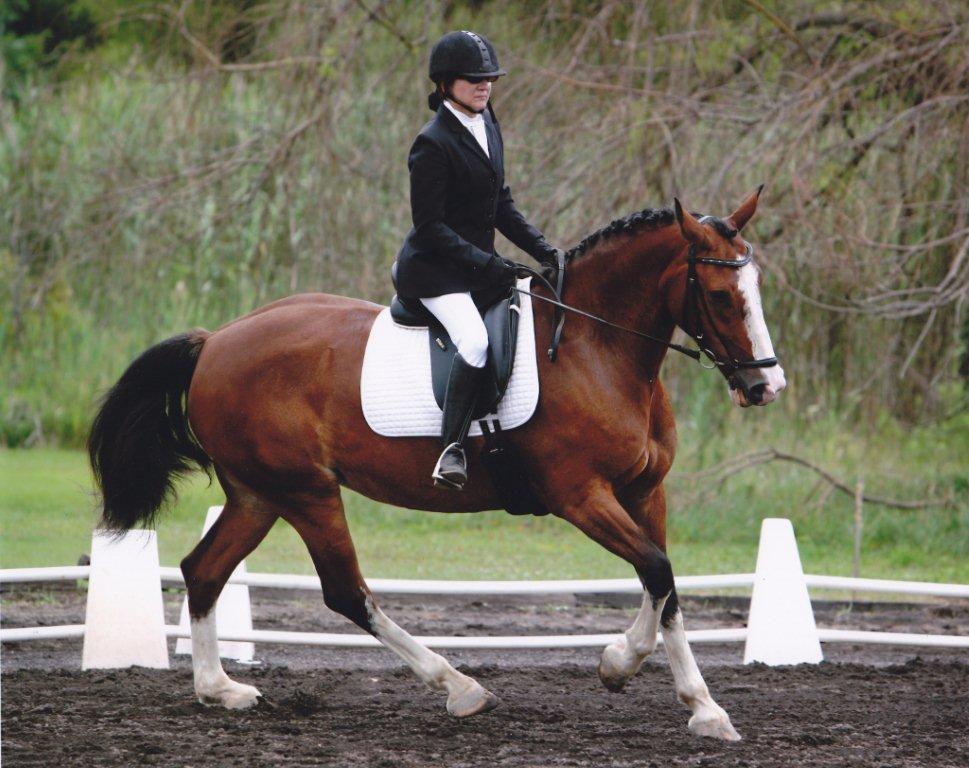
Anna & Christine

A year ago last summer, I received this email entitled “Help!” from a woman named Christine –

I have a beautiful draft cross mare named Anna that just turned five. She got her first pair of shoes, but the farrier put on too-small shoes, set her too upright (she has a very draft foot), and her legs swelled overnight! We immediately pulled off the shoes and called a draft farrier (he owns 25 shires), thinking he must understand the foot. He trimmed her, made shoes for the front, put stock shoes on the back, and she went beautifully. But six weeks later she was forging horribly, was reshod, and went terrible all the same. Needless to say she began to lift her head in an effort to rebalance herself (to shorten her own stride to avoid forging) and developed a shoulder issue. Going to the left, her head bobs, which indicate discomfort somewhere (we checked with hoof testers and it’s not in the hoof), and she now does not want to pick up the right canter lead.

I sent pictures and a video to Dr. _____, an equine podiatrist in _____, and he gave me instructions for my farrier. She is going much better, but I would like to keep her barefoot, and after doing research, I know that it’s a different trim. I still think the toe is too long, and at least we have a good start, but not good enough. I have to fix this! Can you help?

The rather amusing thing about the circumstances was that she was referred to me by someone in Colorado, but lives only about a mile down the same road as my horse’s boarding barn. Talk about a roundabout route to find someone! Anyway, when I met Anna, her feet were in bad shape – terribly out of balance, with very little concavity. As Christine now says –

I have owned horses for over 40 years, and had always put shoes on them because it’s considered the standard of care. As such, I put the first pair of shoes on Anna (whom I use primarily for dressage, where precision and balance is of the utmost importance) the week I purchased her, with the above results. Consequently, I had to have a chiropractor and equine massotherapist work on her on numerous occasions to relieve symptoms of pain. We went through 3 very frustrating shoeing cycles before I found Steve Hebrock. After his first trim, her gorgeous movement returned, and she has been trimmed this way for nearly 2 years now without any problems whatsoever.

No magic here, of course – just a proper trim. As I’ve probably said several times on this website before, properly balancing a horse’s hooves does not make the horse move correctly; it allows the horse to move correctly. The goal of trimming is to facilitate proper movement by removing impediments to movement. And excess length, excess weight, and imbalances are all roadblocks to efficient movement. Anna had experienced all of those – the added length and weight of the shoe, which interfere with breakover, the flight arc, and landing; and trim imbalances, which increase the concussive forces at impact (as does the shoe).

Right Front Hoof
Anna’s Right Front Hoof

This article might more accurately be called “Christine’s Journey,” because once we put Anna on the path to soundness and proper movement, we turned our attention to Christine’s other two horses. As she says –

I also have a 4 yr old Paint gelding that a friend is using, and we had put “corrective shoes” on him for a diagnosis of “navicular.” We also pulled his shoes, had him trimmed the natural way, and he has not taken a bad step since.

The issue with how most vets and farriers treat these horses lies with their deliberately unbalancing the foot by raising the horse’s heels with wedge shoes, wedge pads under flat shoes, or both. The intended purpose is to lower strain across the navicular bone as the horse breaks over, but, at least in this engineer’s mind, there are at least four serious flaws in their logic:

  1. The deliberate imbalance caused by raising the heels increases the concussive forces at impact, which are very destructive,
  2. The increased effective hoof length caused by the shoe and pad both delays, and increases the effort required for, breakover, which more than offsets any reduction in deep flexor tendon tension across the navicular bone,
  3. The increased effective weight of the hoof caused by the shoe and pad interferes with the kinematics of the hoof flight arc and landing, increasing both deep flexor tendon strain across the navicular bone and concussive forces at impact, and
  4. The decreased sensation in the hoof caused by the shoe lessens the horse’s awareness of pain, increasing his odds of causing further damage.

I’m working on a much more detailed analysis of the navicular horse and the effects of shoeing, but for now, let’s wrap up this article with Christine’s closing comments –

When I think back on the numerous unexplained issues and problems that I have experienced with other horses over the years, I can’t help but wonder if the shoes were responsible. In fact, I’m quite sure of it now, but no real way to verify it. But I would strongly recommend to anyone on the fence about this method to please do the research. If you’re truly interested in your horses’ health and well being, you will be amazed at what you’ll read and learn, and wonder why you didn’t do this years ago. I’m very thankful I did. The bottom line is that I will never, ever put shoes on any of my horses again!

Thanks, Christine; I couldn’t have said it better myself!

Until next time…

With all the craziness in my life these past several weeks, both professionally and personally, I’ve definitely not been able to keep up with Enlightened Equine postings. But I’ve got a number of them in the works, as they say, and I promise it’ll be worth the wait!

EA Vertical MA Logo_2

In the meantime, I received word the other day that I’ll be speaking at the Equine Affaire in Columbus, Ohio, on April 14th at 10AM, which I’m very excited about! I’ve been going to this show since it’s second offering (1995 or 1996 – I can’t remember), when it was only 2 or 3 days long and was held in Dayton, Ohio. And it’s always been an adventure! Over the years, I’ve heard some very interesting and informative presenters whose messages really resonated with me – Gene Ovnicek, Hilary Self, Don West, and Susan Harris come immediately to mind – as well as a number of true training legends like John Lyons and Monty Roberts.

And then there’s the shopping! If you’re looking for anything horse-related, regardless of the discipline or breed, you’ll probably find it there. I must admit that I really enjoy wandering the aisles of booths, seeing what’s new and talking with vendors and attendees alike. In fact, for many years, part of my annual pilgrimage to Columbus was to help out my friend Ana at the Equestrian Enterprise booth, folding T-shirts, restocking shelves, collecting money, and answering questions. And while it may seem like an odd way to spend my time, I really enjoyed the radical departure from my “usual” life.

But now I’ve got a real opportunity. My talk is on the importance of proper hoof care for youngsters: specifically, what can and cannot be accomplished “at the ground” with respect to less-than-optimal conformation in the young horse. And while I realize that if you’re reading this on my website, I’m probably already “preaching to the choir,” I’d certainly love to see and meet many of you whom I’ve never before encountered face-to-face. So please stop by and say “hello.” And, more importantly, bring your “horsey” friends so they can hopefully get their horses on the path to long-term comfort and soundness!

More soon…

John D. Hebrock
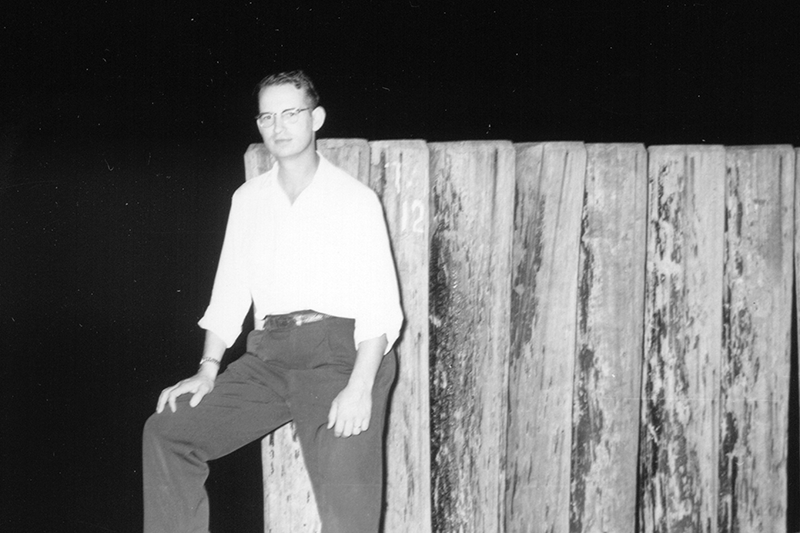
John D. Hebrock 8/30/1928 – 1/15/2013

The path we follow through life is a funny thing. And it’s been on my mind these past couple of weeks with the very unexpected news that my father had been taken to the hospital and diagnosed with a rapidly-progressing terminal illness. And so I went to New York to see him one last time, and he passed away peacefully just 4 days later.

My dad’s road was different from mine – his was straighter. Although he had no formal education past high school (he’d received an appointment to the United States Military Academy at West Point, but his family insisted he go to work instead), he had a voracious appetite for learning, far more common sense than most, and a genuine talent for mechanics, electronics, and photography. And so he spent his entire career working for the same medium-sized newspaper in southwestern New York, in spite of job offers from around the country.

Growing up with him was a real experience. He surrounded me with opportunities to learn. The house was full of not only tools and equipment – we had a well-equipped wood and metalworking shop, an electronics shop, and a darkroom – but of publications such as Popular Science, Popular Mechanics, Popular Electronics, and Science & Mechanics. Family vacations nearly always consisted of trips to science museums – the Ontario Science Center, Chicago’s Museum of Science and Industry, the Smithsonian, Boston’s Museum of Science. But more importantly, I lived with a man who took my frequent “whys” and “hows” seriously, and made every effort to give me complete and accurate answers regardless of the subject.

Perhaps the best lesson of all, though, was his general outlook on life. My father never spoke of “success” as having anything to do with how much money or property someone had. For him, it was a combination of love for what you do, pride in a job well done, and a willingness to share what you have with others. And according to that definition, I have to say he was the most successful person I’ve ever known.

My father also loved poetry, so it seems fitting to finish up this very brief tribute to a fascinating man with one of Robert Frost’s most notable poems –

The Road Not Taken

Two roads diverged in a yellow wood,
And sorry I could not travel both
And be one traveler, long I stood
And looked down one as far as I could
To where it bent in the undergrowth;

Then took the other, as just as fair,
And having perhaps the better claim,
Because it was grassy and wanted wear;
Though as for that the passing there
Had worn them really about the same,

And both that morning equally lay
In leaves no step had trodden black.
Oh, I marked the first for another day!
Yet knowing how way leads on to way
I doubted if I should ever come back.

I shall be telling this with a sigh
Somewhere ages and ages hence:
Two roads diverged in a wood, and I –
I took the one less traveled by,
And that has made all the difference.

Robert Frost

You, indeed, have made all the difference for me, Dad, and I am eternally grateful for it. You never took the easy road yourself, but you paved the way for many others to have a safer and easier journey. You inspired and equipped me to pursue my own path, and I am the better man for it. I’ll miss your smile, your generosity, and your wealth of knowledge on a great many subjects you were always so willing to share. I truly hope we’ll meet again some day – perhaps on the other side of Frost’s yellow wood…

One of the interesting things about managing a blog is the sense of frustration that occurs when you can’t find exactly the right tool to do what you need. That was the case when, a few months ago, people started asking for copies of my blog articles to hand out to their fellow horse owners. So I’ve been searching for a tool that would allow me to automatically format blog posts in an acceptable format for printing, but, alas, all of the add-ins I could find either wouldn’t generate an acceptable layout or  required the reader to jump through too many hoops (like sign up for the service or endure endless ads).

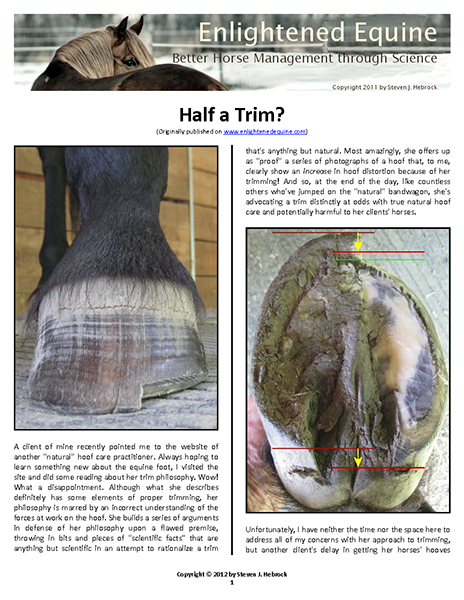
Sample page layout for print versions

And so, I finally decided to give up the search and start formatting them to my liking as printable PDF files, available on their own page on the site. That way, I’ve got absolute control over the layout/formatting (I value nice & neat!) and can maintain the continuity of the article as posted. A link to their page now appears in the sidebar under the heading “Printable Article Archive.” I’ve started with four popular ones, and I’ll continue to expand the offerings as time permits. Please share them with your friends!

Exciting news coming soon…